When Might You Need an MRI After a Car Accident?
A car accident puts sudden force on the body in a fraction of a second. Even a low-speed collision can push the head, neck and spine past their normal range of motion. Because adrenaline floods the system right after a crash, many people feel shaken but not hurt, and only notice pain once the body settles down.
That delay leaves a lot of drivers and passengers unsure what to do next. Neck stiffness shows up the next morning, back pain builds over a few days, or a tingling sensation appears in one hand. An X-ray at urgent care may come back normal, yet the symptoms keep going. This is usually the point where people start asking whether they need an MRI.
Quick Answer: You might need an MRI after a car accident if pain, numbness, tingling, weakness or headaches last more than a few days, get worse, or do not match a normal X-ray. An MRI shows soft tissues such as discs, ligaments, nerves and muscles that X-rays cannot. Your doctor decides when it is needed based on your symptoms and physical exam.
Why Car Accident Injuries Do Not Always Show Up Right Away
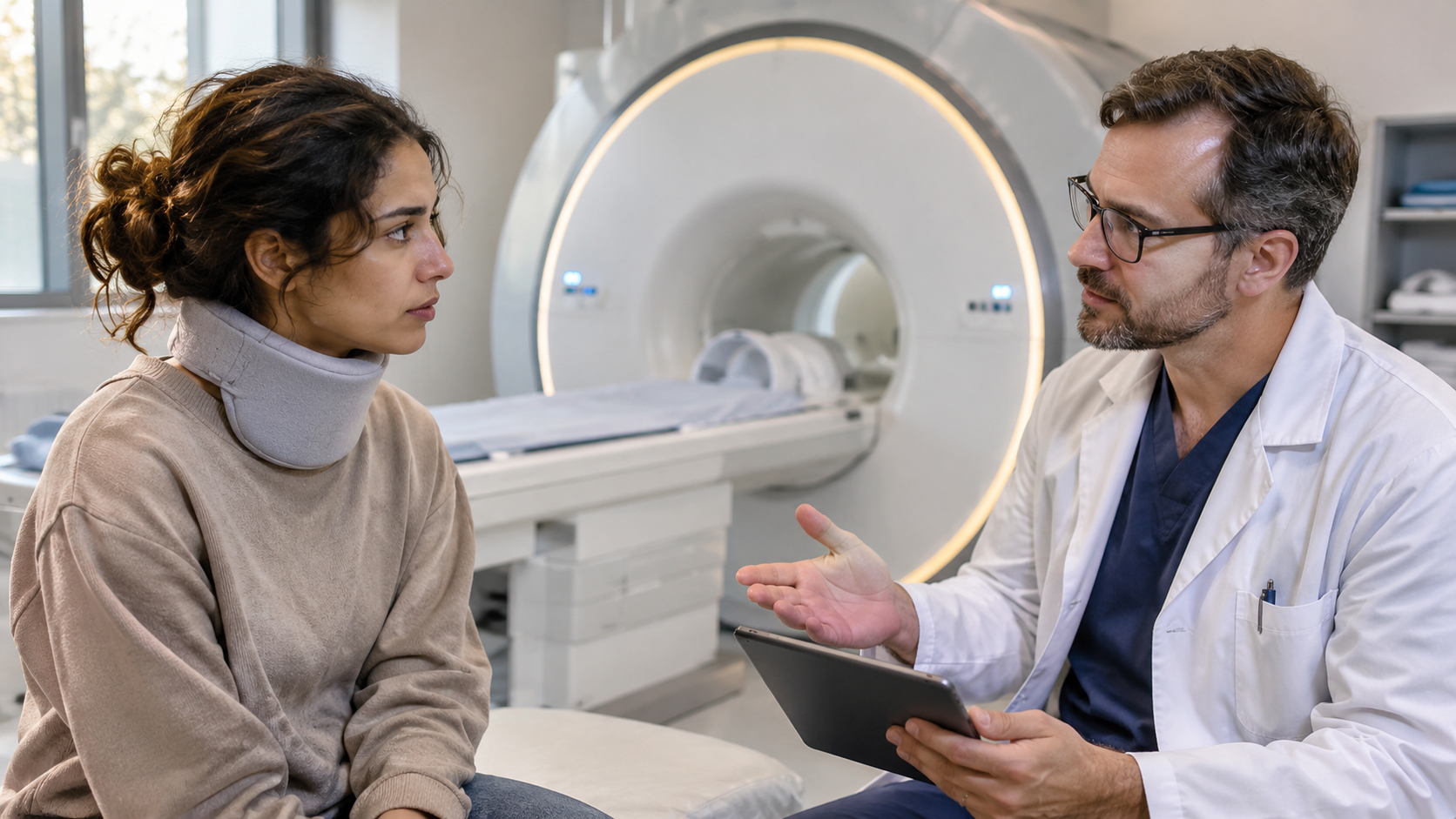
Right after a collision, the body releases stress hormones that can mask pain for hours or even days. Inflammation in injured tissue also takes time to build. As swelling increases, pressure on muscles, joints and nerves grows, and that is often when the real discomfort starts.
This is why doctors often recommend a check-up after any accident, even if you feel fine at the scene. A first visit creates a baseline, and a follow-up visit can catch symptoms that develop later. Delayed pain is common and does not mean the injury is minor.
What an MRI Can Show That an X-Ray Cannot
X-rays and CT scans are very good at showing bones, which is why emergency rooms use them first to rule out fractures. However, many car accident injuries involve soft tissue rather than bone. A normal X-ray only tells you that no bone is broken or out of place.
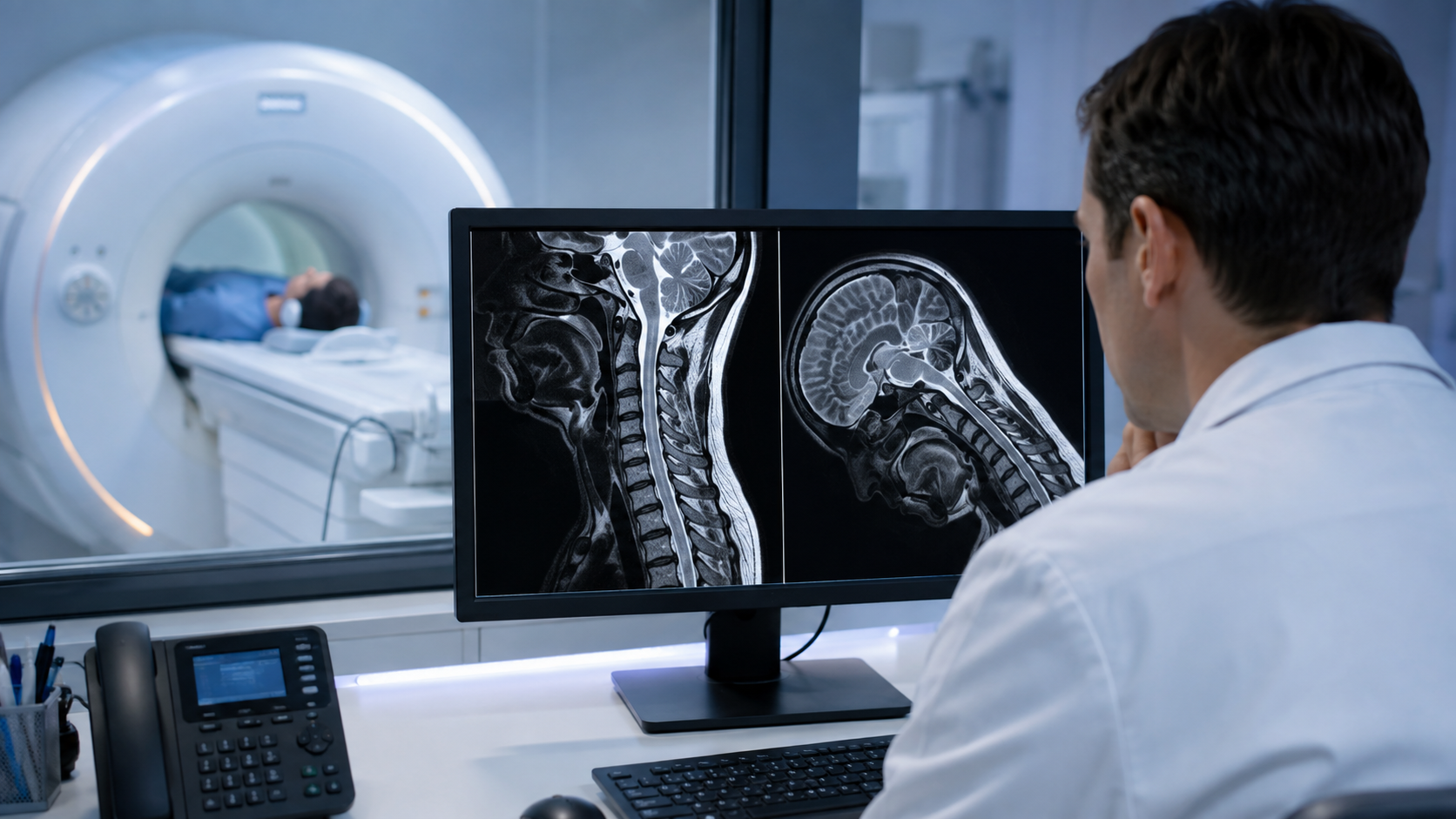
MRI uses a magnetic field and radio waves instead of radiation to create detailed images of soft tissue. It can show disc herniations, ligament tears, nerve compression, spinal cord changes, muscle injuries and swelling inside a joint. For symptoms that point to these structures, an MRI often provides answers that other imaging cannot.
Signs You Might Need an MRI After a Car Accident
Not everyone involved in a crash needs an MRI. Many mild strains improve with rest, time and basic care. Your doctor is more likely to order one if you notice any of the following:
• Neck or back pain that lasts more than a few days or keeps getting worse
• Numbness, tingling or weakness in the arms, hands, legs or feet
• Pain that shoots down an arm or leg
• Headaches, dizziness or trouble concentrating that do not improve
• Shoulder or knee pain, clicking, locking or instability
• Pain that has not responded to physical therapy or other treatment
Symptoms like these suggest that a nerve, disc, ligament or joint structure may be involved. An MRI helps your doctor see what is happening and plan the right treatment instead of guessing.
Common Car Accident Injuries Found on MRI
Different types of collisions stress different parts of the body. Rear-end crashes often affect the neck, while side impacts and head-on collisions can injure the back, shoulders and knees. Here are the injuries an MRI is most often used to evaluate.
Neck and Whiplash Injuries
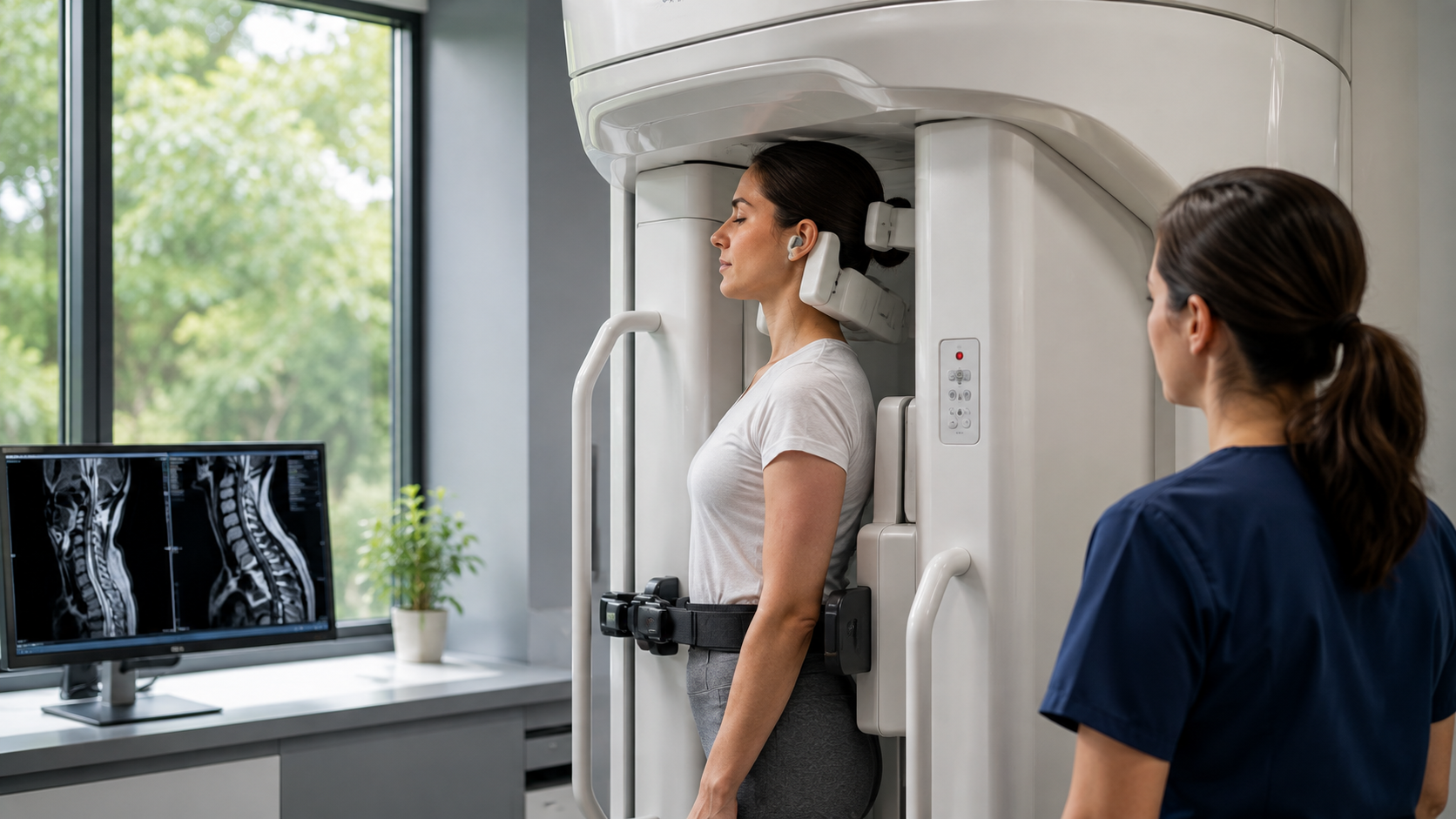
Whiplash happens when the head moves rapidly back and forth. Mild whiplash may not show anything specific on an MRI, but the scan can reveal more serious whiplash-related injuries such as ligament damage, disc herniation or nerve compression in the cervical spine. Ruling these out is important when neck pain or arm symptoms persist.
Back and Disc Injuries
The force of a crash can push a spinal disc out of place or tear its outer layer. When a herniated disc presses on a nearby nerve, it can cause sharp pain, sciatica or leg weakness. A back and spine MRI is the standard test for seeing discs and the nerves around them clearly.
Shoulder and Knee Injuries
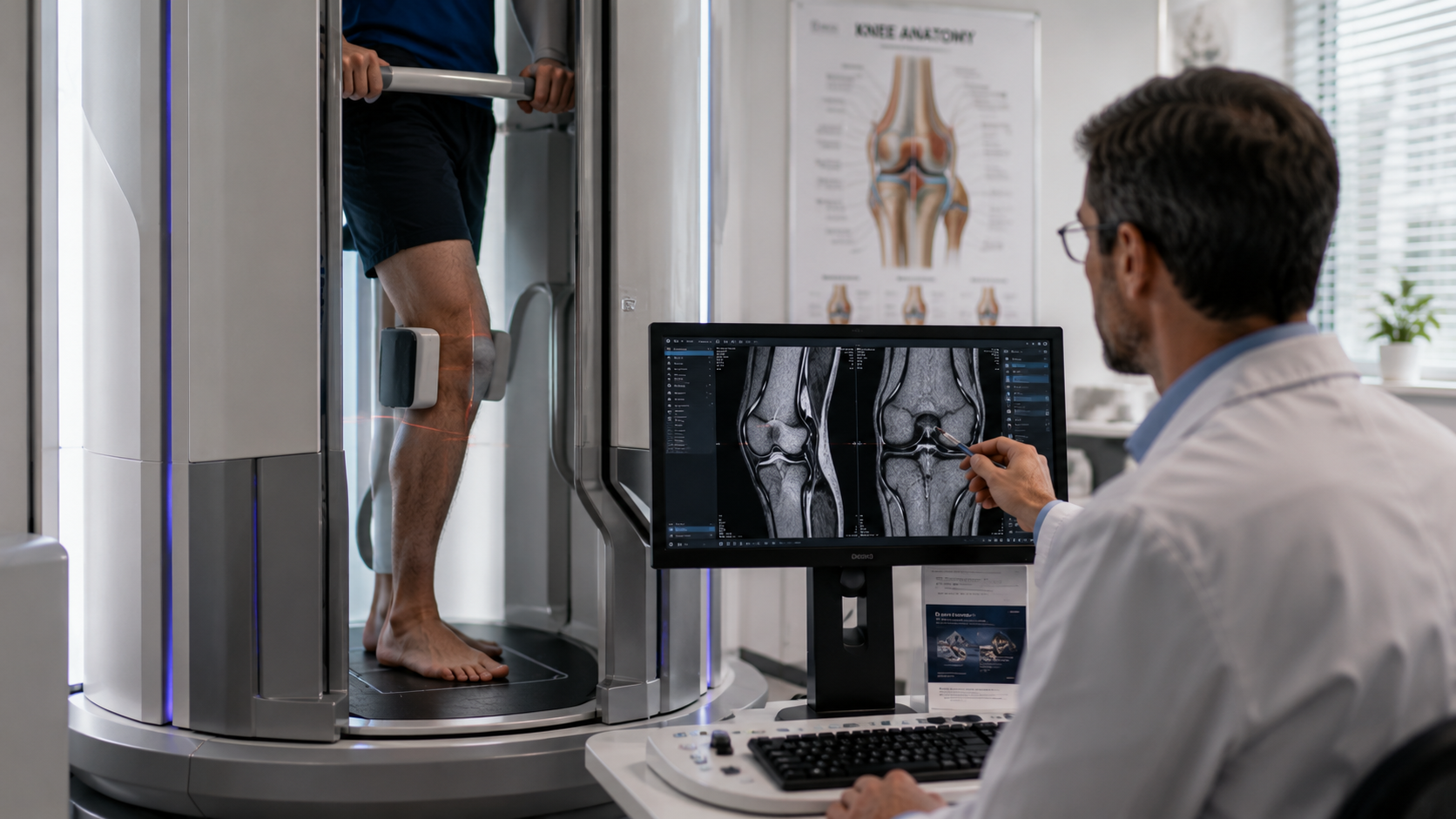
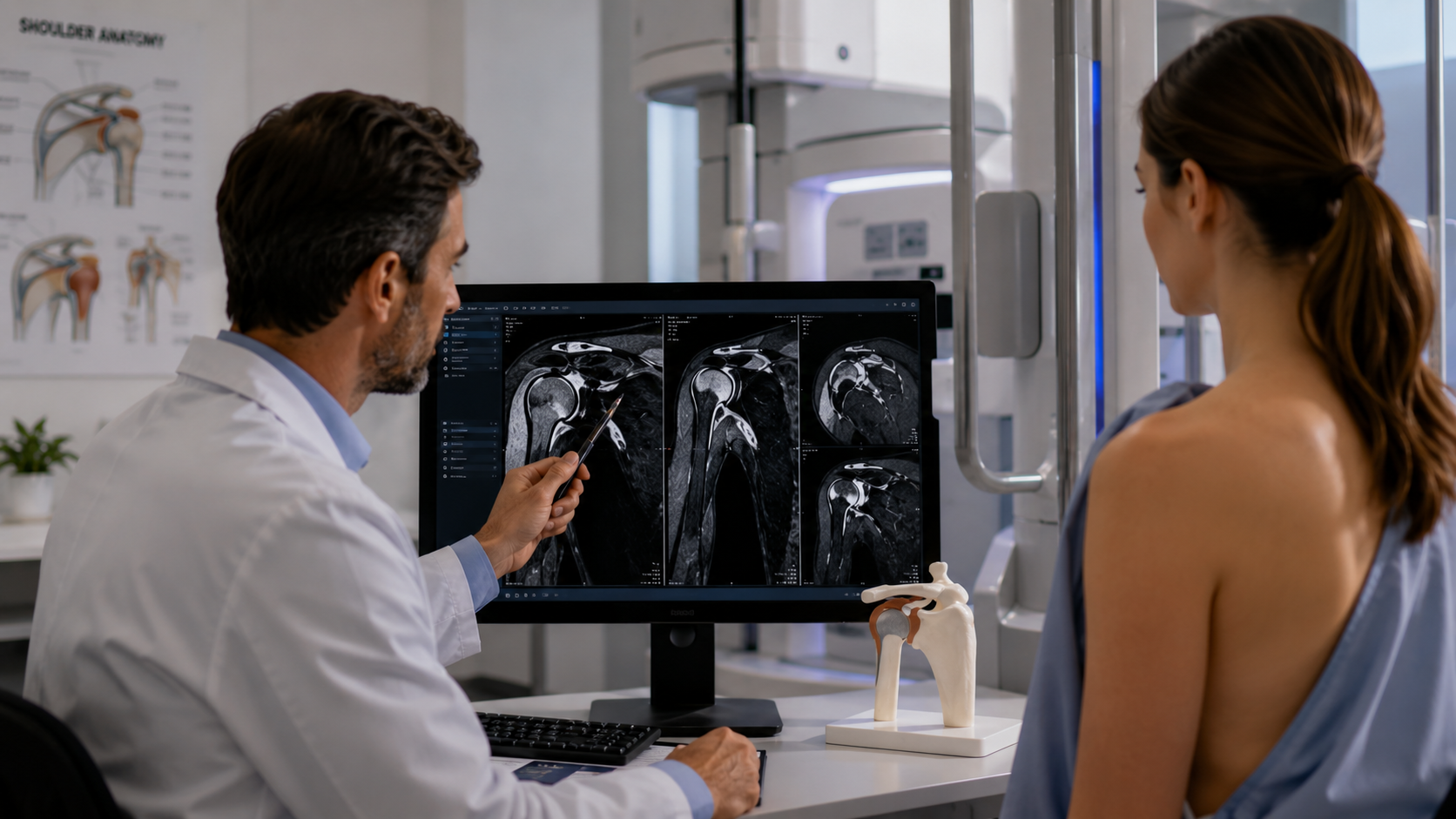
Bracing against the steering wheel or striking the dashboard can injure the shoulder and knee. A shoulder MRI shows rotator cuff and labral tears, while a knee MRI shows meniscus tears and ligament injuries such as ACL damage. These are often missed on X-rays because they involve cartilage and soft tissue.
Head Injuries
A brain MRI may be recommended when headaches, memory problems, confusion or vision changes continue after an accident. It can show small areas of bleeding or tissue injury that other scans may not pick up. Any sudden or severe head symptoms should always be checked in an emergency setting first.
When You Should Go to the ER Instead
An outpatient MRI is meant for symptoms that are persistent but stable. Some warning signs need emergency care right away. Call 911 or go to the nearest emergency room if you experience:
• Loss of consciousness, confusion or a severe or worsening headache
• Sudden weakness or numbness on one side of the body
• Loss of bladder or bowel control
• Severe neck pain with numbness or weakness in the limbs
• Trouble breathing, chest pain or abdominal pain
How Soon After a Car Accident Should You Get an MRI?
There is no single timeline that fits everyone. If you have neurological symptoms such as numbness or weakness, your doctor may order an MRI within days. For neck or back pain without these signs, many doctors start with rest and physical therapy and order an MRI if the pain does not improve over the following weeks.
The most important step is to see a doctor promptly and keep your follow-up appointments. Waiting too long to report symptoms can delay treatment and make it harder to connect an injury to the accident later.
Why an Upright MRI Can Help After a Car Accident
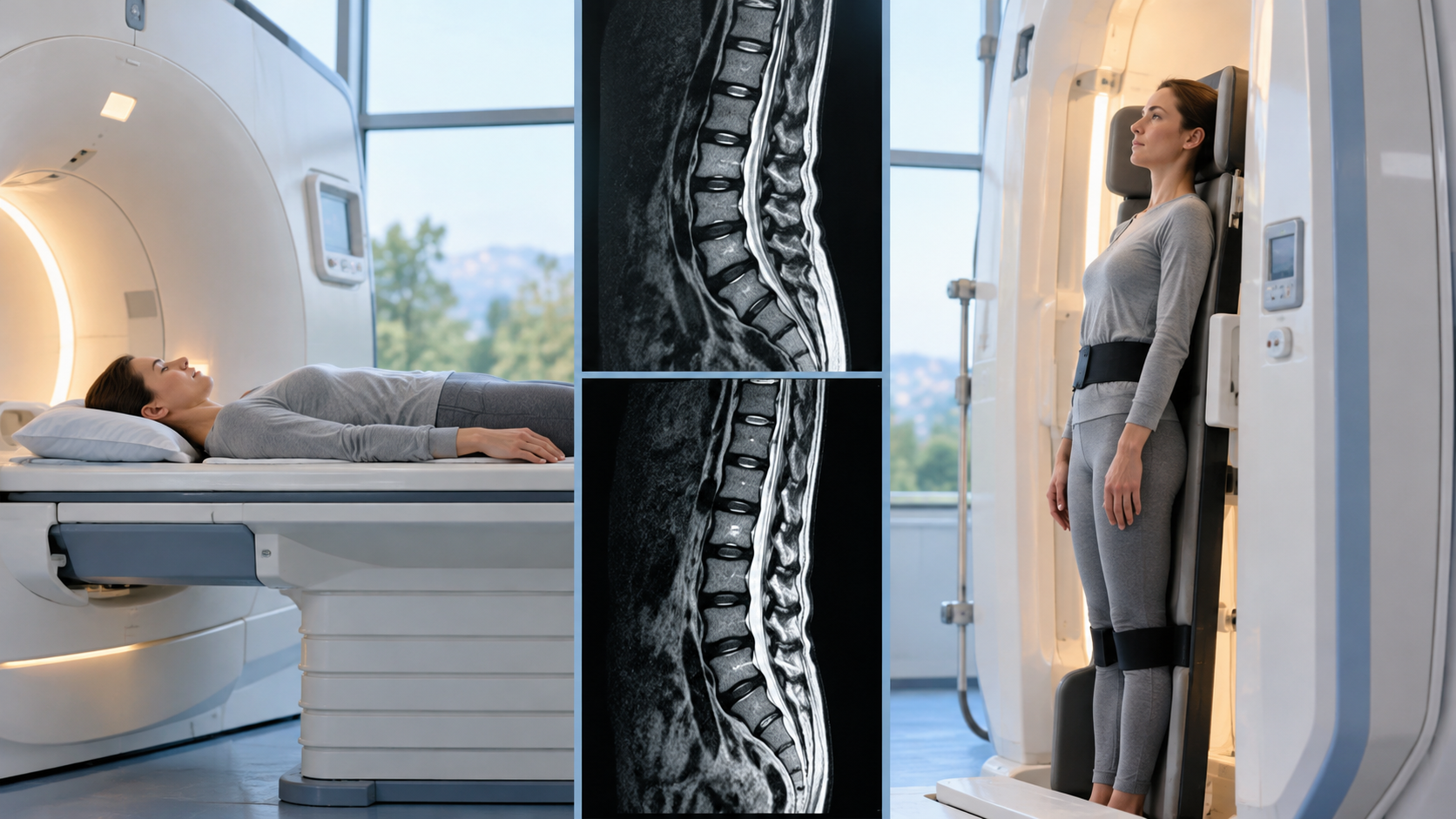
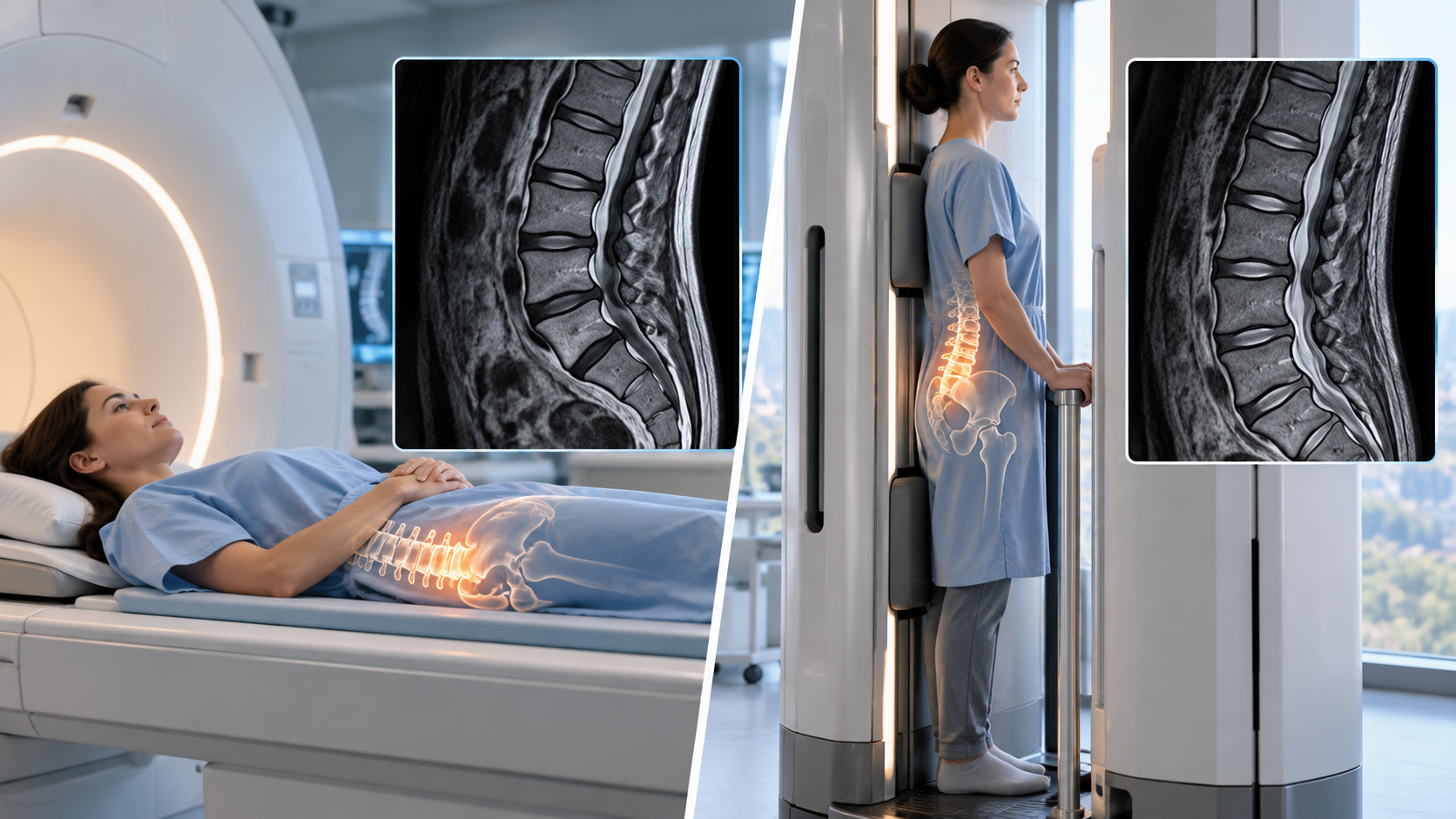
Traditional MRI scanners require you to lie flat inside a narrow tube. For someone with neck or back pain, holding that position can be uncomfortable. People who feel anxious in tight spaces may also struggle to finish the scan, especially after a stressful event like a crash.
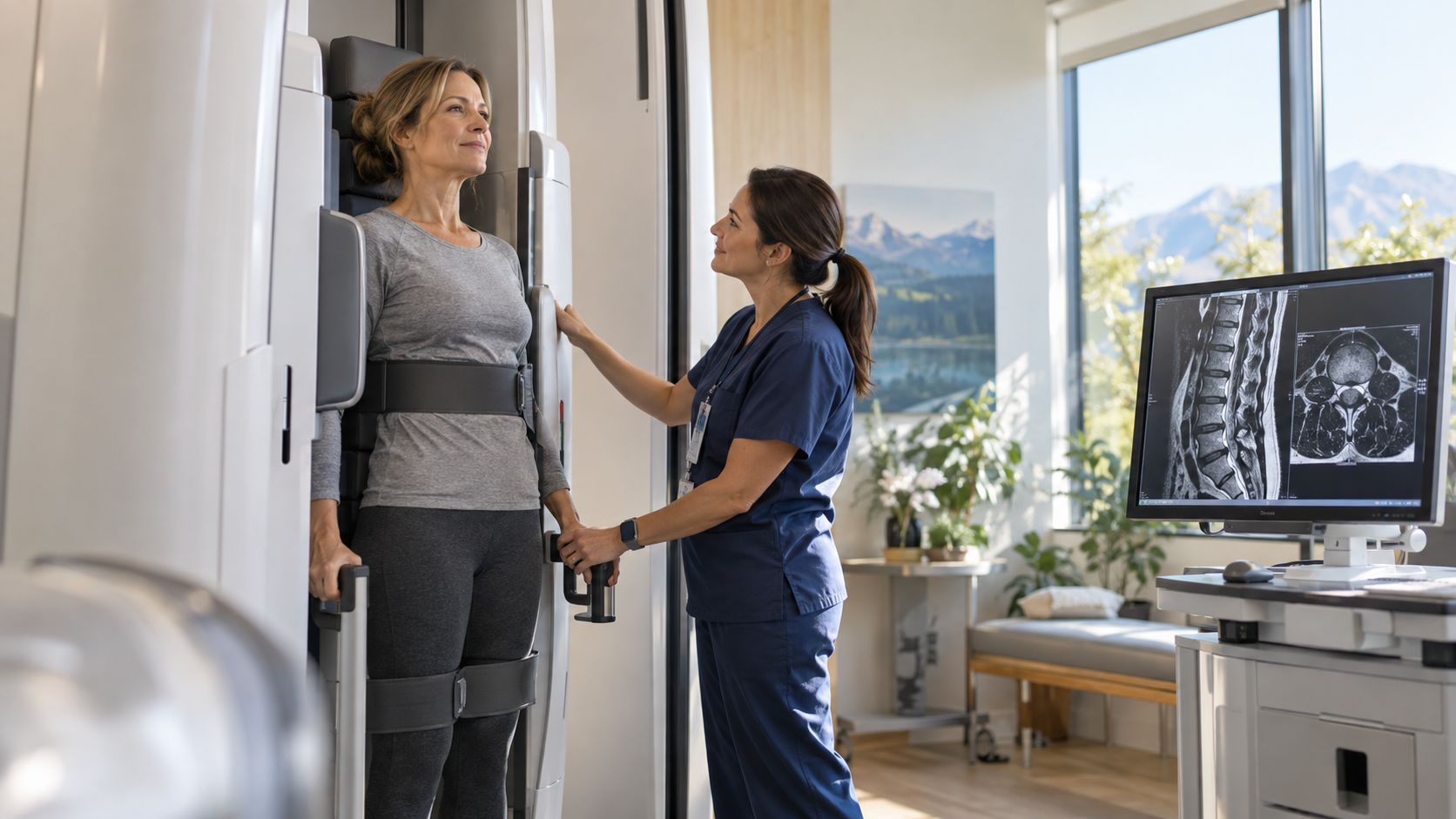
An upright MRI is open in front, so you can see out during the scan. It can image you while sitting or standing, which puts natural body weight on the spine. Some injuries only cause pain in certain positions, and flexion and extension imaging can help your doctor see the problem as you actually experience it.
Why Imaging Records Matter After an Accident
An MRI report gives a clear, objective record of your injuries. That record helps your doctor track healing and adjust your care over time. If your case involves an insurance claim or a personal injury attorney, detailed imaging can also support your medical documentation. Ask for copies of your images and the radiologist report for your files.
Frequently Asked Questions
Should I get an MRI after a car accident even if I feel fine?
Most people who feel completely fine do not need an MRI right away. It is still wise to see a doctor after any accident because some injuries cause delayed symptoms. If pain or other symptoms appear in the following days, your doctor can decide whether an MRI is needed.
Will whiplash show up on an MRI?
Mild whiplash, which is a soft tissue strain, may not appear clearly on an MRI. However, an MRI can show related injuries such as disc herniations, ligament tears or nerve compression. This is why doctors often order one when neck pain or arm symptoms continue.
Is an MRI better than an X-ray after a car accident?
They answer different questions. An X-ray or CT scan is best for checking broken bones, while an MRI is best for soft tissue such as discs, ligaments, nerves and cartilage. Many patients get an X-ray first and an MRI later if symptoms persist.
How long after a car accident can injuries show up?
Symptoms can appear within hours, but many people notice pain one to three days later. Some symptoms, such as nerve pain or headaches, can take even longer to become clear. Any new or worsening symptom after an accident is worth reporting to your doctor.
Do I need a doctor referral for an MRI after a car accident?
Yes, an MRI generally requires an order from a doctor, chiropractor or other qualified provider. The order tells the imaging center which body area to scan and why. Your provider then reviews the results with you and plans your treatment.
Conclusion
You might need an MRI after a car accident when pain, numbness, weakness or headaches do not fade, get worse, or are not explained by a normal X-ray. The scan shows soft tissue injuries that other tests miss, helping your doctor choose the right treatment sooner.
If your doctor has recommended an MRI after an accident, Upright MRI of Deerfield offers open, upright scanning in a comfortable setting, including positional imaging for spine and joint pain. Reach out to our team to schedule your scan or ask any questions about your appointment.
SHARE THIS POST:
Leave a Comment:

The World's Most Patient-Friendly MRI. A comfortable, stress-free, and completely reliable MRI scan. We offer patients an open, upright, standup MRI experience that helps those who are claustrophobic and stress being in a confined area. Upright MRI of Deerfield is recognized as the world leader in open MRI innovation,
Our Recent Post



READ PATIENT TESTIMONIALS
Upright MRI of Deerfield.
Susan D.,
Highland Park, 39
I am going to tell everyone about your office! This was a great experience after I panicked in other MRI machines and had to leave. Thank you so much.

Judith B.,
Milwaukee, 61
I suffer from vertigo and other MRIs do not work. This was wonderful…absolutely NO discomfort at all. The MRI was so fast…I wanted to stay and watch the movie! Mumtaz was great. His humor really put me at ease. I’ve already recommended Upright MRI to friends.
Delores P.,
Glencoe, 55
Everything is so nice and professional with your place. I have been there a couple of times. My husband and I would not go anywhere else.