Lower Back Pain After Lifting at Work: When Might You Need an MRI?
Lower back pain is one of the most common reasons people miss work. Jobs in warehouses, construction, healthcare, retail and delivery involve lifting, twisting and carrying every day. Over time, or in a single awkward moment, that repeated load can strain the muscles, ligaments and discs that support the lower spine.
Often the injury starts with a specific moment. You lift a heavy box, twist to set it down, and feel a sharp pull or a pop in your lower back. By the next morning it is stiff, sore and hard to bend. The big question then is whether this will heal with time or whether you need imaging like an MRI.
Quick Answer: Most lower back pain after lifting improves within a few weeks with rest, gentle movement and conservative care, so an MRI is usually not the first step. An MRI may be needed if pain lasts beyond about six weeks despite treatment, or if it spreads down the leg with numbness or weakness. Red flags such as loss of bladder control need urgent care.

What Happens to Your Back When You Lift the Wrong Way
Lifting with a rounded back, twisting while holding weight or reaching too far forward places heavy stress on the lumbar spine. The most common result is a muscle or ligament strain. These injuries cause pain, spasms and stiffness, but they usually heal well on their own.
In some cases, the pressure inside a spinal disc pushes its soft center through the tougher outer ring. This is called a herniated disc. If the herniated material presses on a nearby nerve root, it can cause pain, tingling or weakness that travels into the buttock, thigh or leg, often called sciatica. A seated MRI for sciatica can show this pressure while you sit.
Why Doctors Often Wait Before Ordering an MRI
Medical guidelines, including the American College of Radiology Appropriateness Criteria, state that uncomplicated acute low back pain usually does not need imaging. Most people improve without it. Studies cited in these guidelines show that about half of patients with acute low back pain feel better within two weeks, and about 90 percent improve within three months.
Another reason to wait is that MRIs often show age-related changes, such as disc bulges, in people who have no pain at all. Scanning too early can lead to findings that are not related to your symptoms. For these reasons, doctors usually try about six weeks of conservative care first, unless warning signs are present.
Signs Your Back Pain After Lifting May Need an MRI
An MRI becomes more useful when symptoms suggest a nerve or disc problem, or when treatment is not working. Your doctor may recommend one if you have:
• Pain that has not improved after about six weeks of physical therapy, medication or other treatment
• Pain that shoots from the lower back down one or both legs
• Numbness or tingling in the buttock, leg or foot
• Leg or foot weakness, such as trouble standing on your toes or heels
• Pain that keeps getting worse instead of slowly improving
An MRI is also commonly ordered when a patient and doctor are considering treatments such as spinal injections or surgery. In those cases, detailed images help guide the treatment plan.
Red Flags That Need Urgent Medical Care
Some symptoms after a back injury can point to serious problems, including cauda equina syndrome, a rare condition where nerves at the base of the spine are compressed. Seek emergency care right away if you notice:
• Loss of bladder or bowel control, or new trouble urinating
• Numbness in the groin, inner thighs or buttocks
• Leg weakness that is severe or getting worse quickly
• Back pain with fever, unexplained weight loss or a history of cancer
What an MRI Can Find After a Lifting Injury
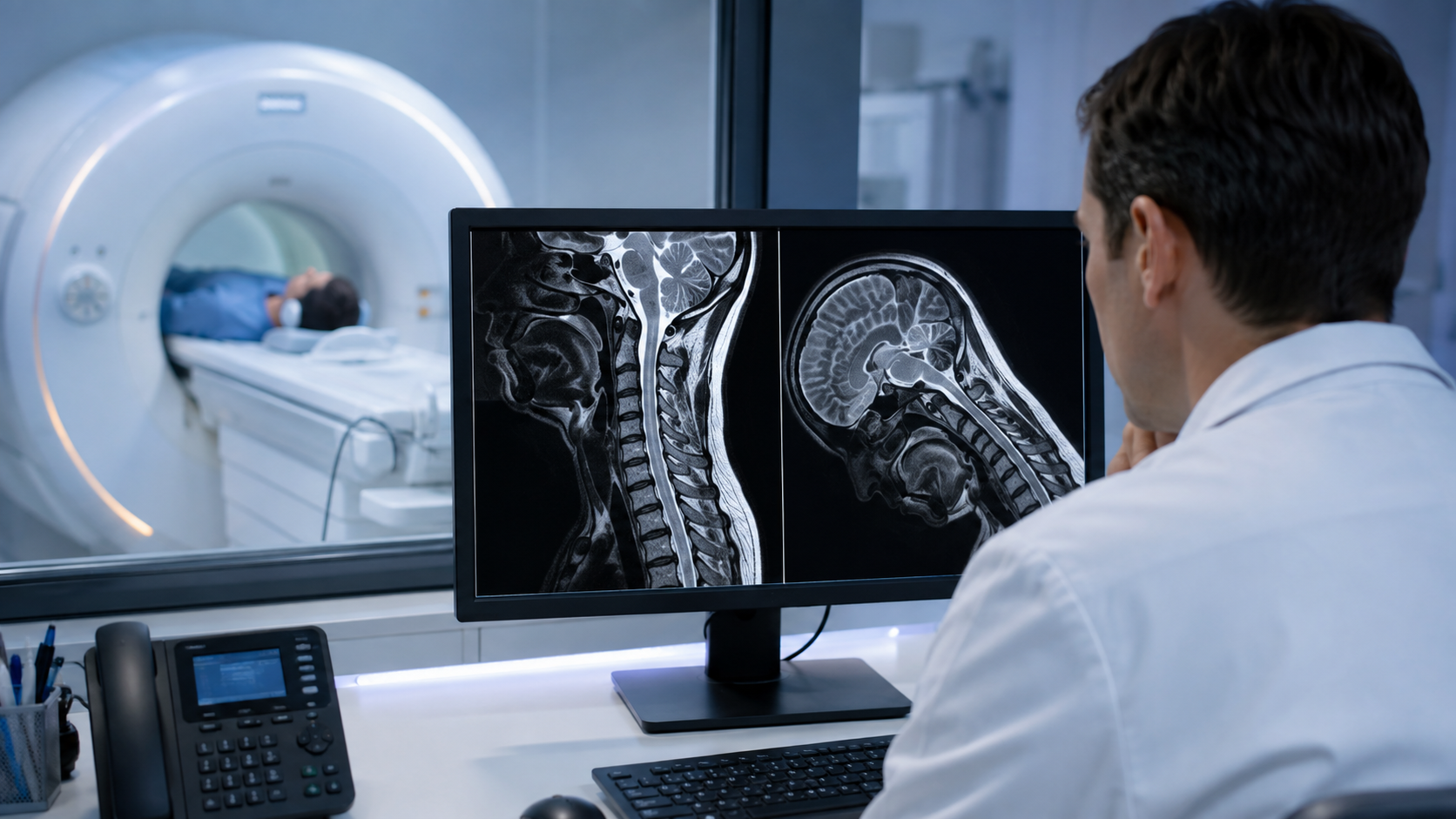
A back and spine MRI gives a detailed view of the soft tissues in and around the spine without using radiation. It can show herniated or bulging discs, tears in the outer layer of a disc, nerve root compression and narrowing of the spinal canal. It can also reveal swelling in bones or soft tissue that points to a recent injury.
These details help your doctor match what is on the image to your symptoms. A disc pressing on the nerve that serves your painful leg, for example, explains your pain and helps guide targeted treatment.
Reporting a Back Injury at Work
If you hurt your back while lifting on the job, report the injury to your employer as soon as possible, even if the pain seems minor. Seeing a doctor promptly creates a medical record that links your symptoms to the work incident. If an MRI is ordered later, the report becomes part of that record and can support a workers compensation claim.
Why Weight-Bearing MRI Matters for Lifting Injuries
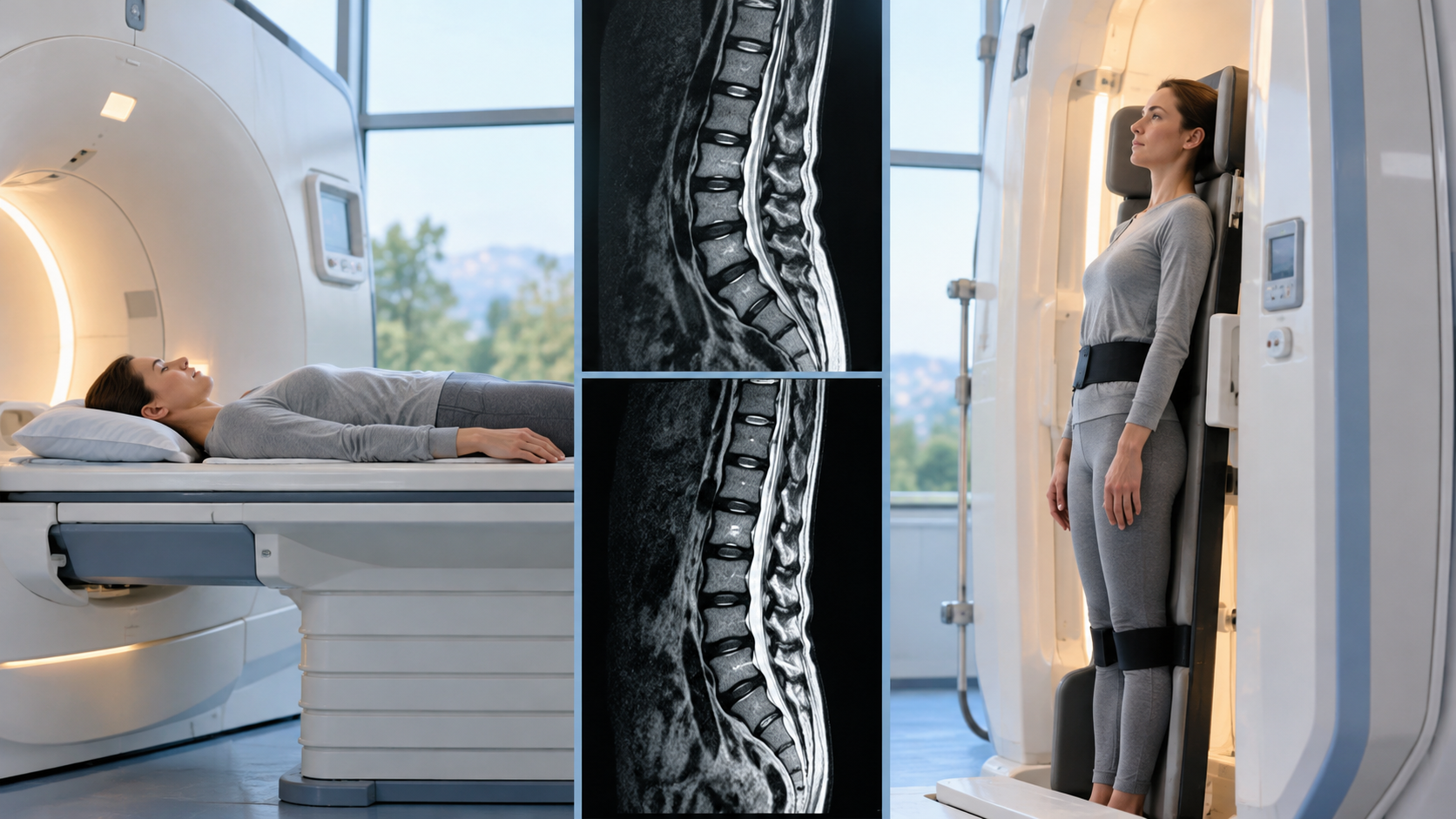
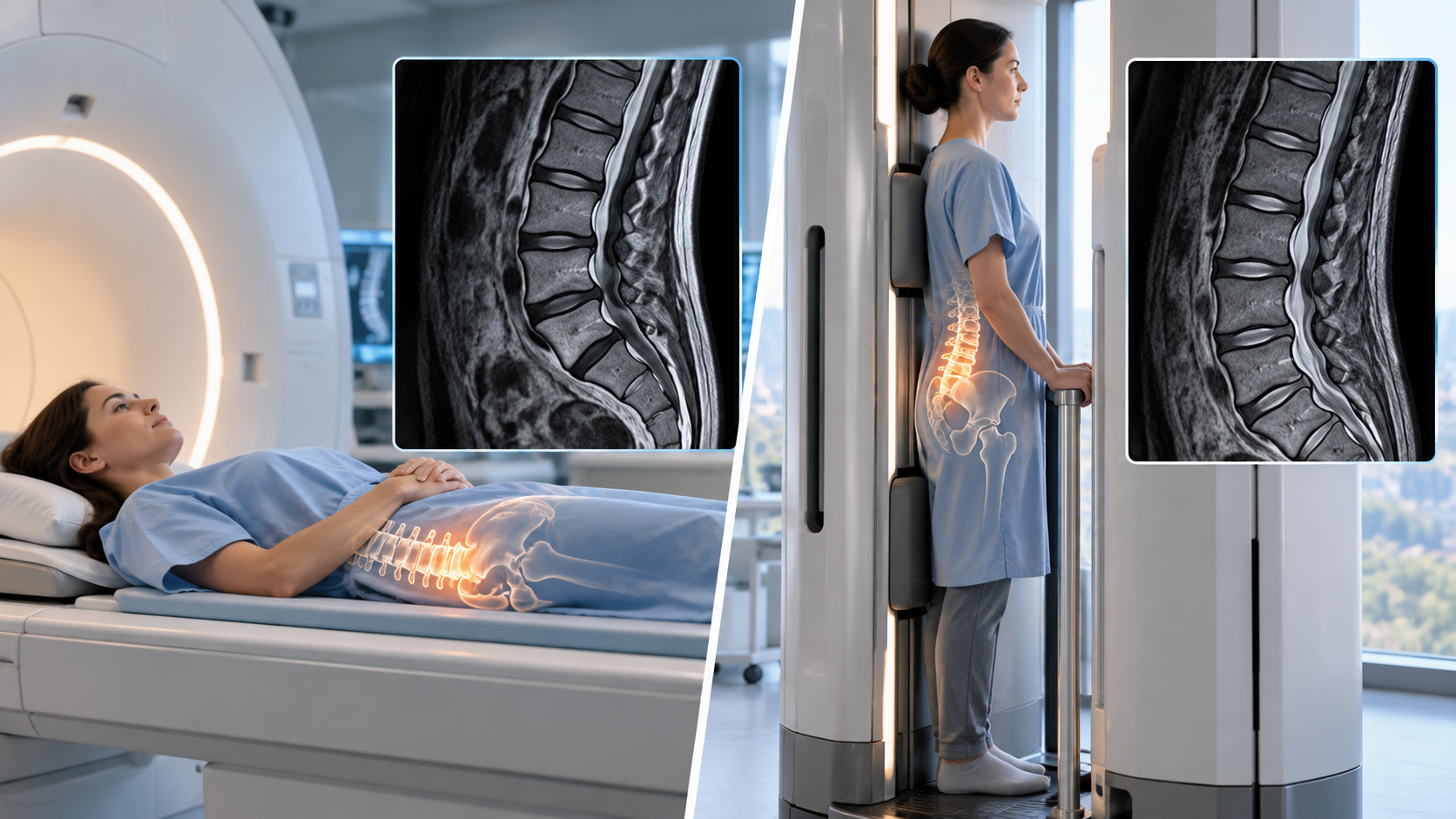
Many people with lifting injuries feel the most pain when standing, sitting or bending, and less pain when lying down. A traditional MRI scans you lying flat, which takes the weight off your spine. In some cases, this can make a disc problem or nerve compression look less severe than it feels in daily life.
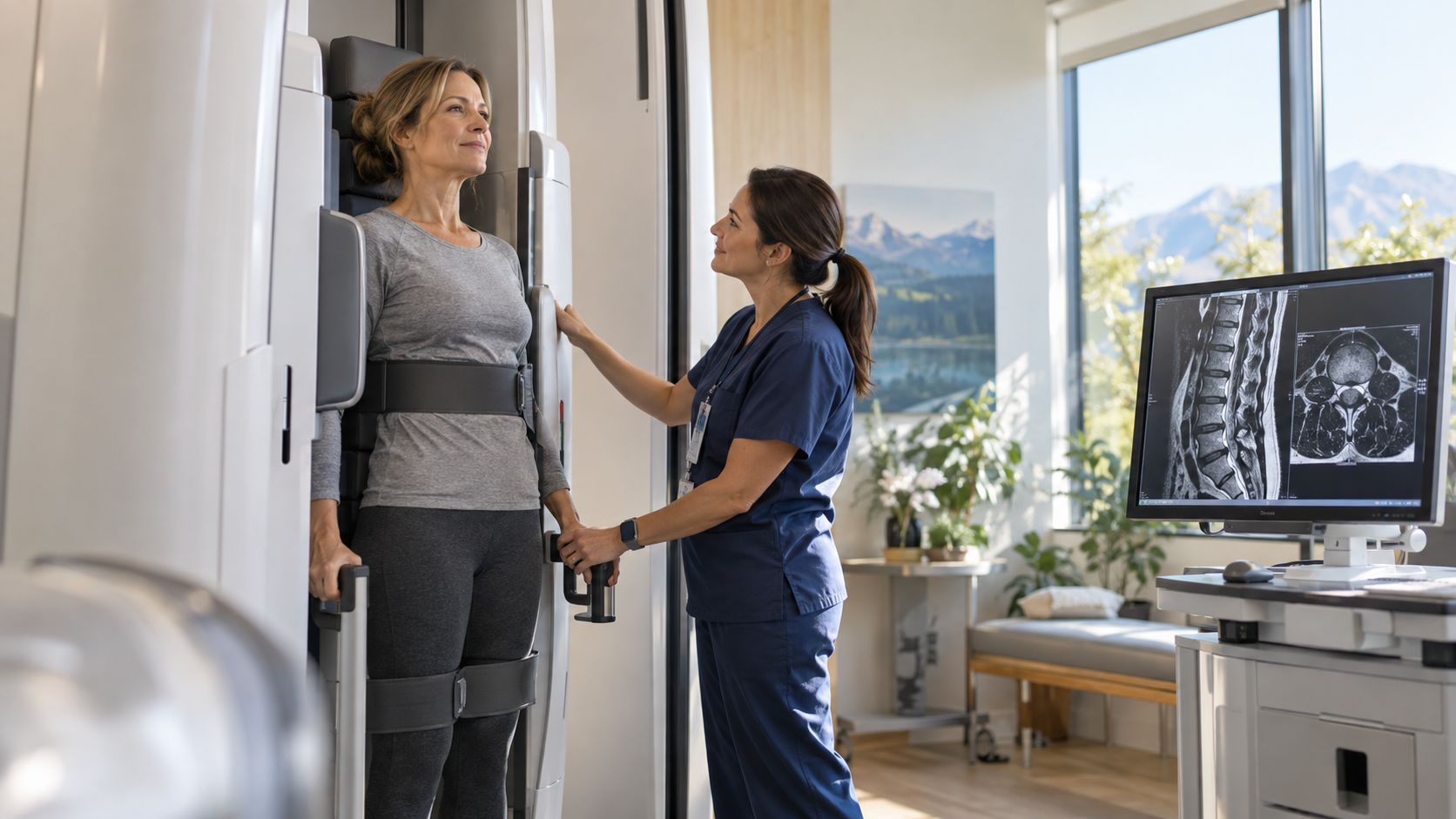
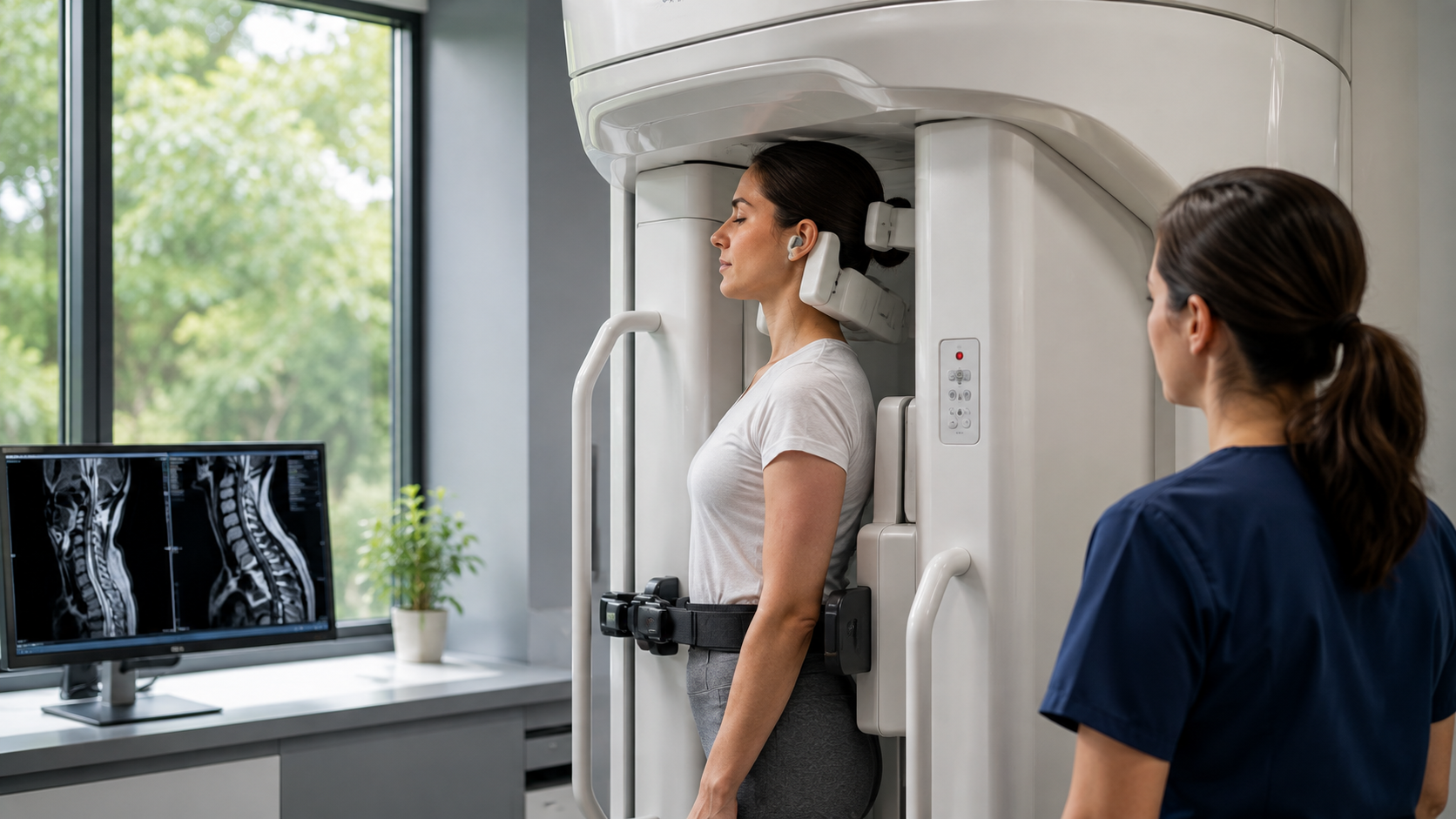
An open upright MRI can scan your lower back while you sit or stand, so the spine carries its normal load. It can also image bending positions that trigger your pain. This gives your doctor a view of the spine under real-world conditions, which can be especially useful for work-related lifting injuries.
Frequently Asked Questions
How long should lower back pain last after lifting something heavy?
Most lower back strains improve noticeably within a few days to two weeks and continue to heal over several weeks. If your pain has not improved after about six weeks of care, talk to your doctor about next steps. Pain that worsens or spreads into the leg should be checked sooner.
Can an MRI show a pulled muscle in the lower back?
An MRI can sometimes show swelling or injury in back muscles, but most muscle strains are diagnosed through a physical exam. MRI is more often used to look for disc, nerve and spinal canal problems. Your doctor will order one if your symptoms suggest something beyond a simple strain.
How do I know if I herniated a disc lifting at work?
A herniated disc often causes pain that travels from the lower back into the buttock or leg, sometimes with numbness, tingling or weakness. Pain may worsen when you sit, bend or cough. An exam and, when needed, an MRI can confirm the diagnosis.
Is an X-ray enough for back pain after lifting?
An X-ray shows bones and can help rule out fractures or alignment problems, but it does not show discs or nerves clearly. If your doctor suspects a herniated disc or nerve compression, an MRI is the better test. Many lifting injuries never need either scan.
Should I keep working with lower back pain after lifting?
This depends on your symptoms and the demands of your job, so it is best decided with your doctor. Gentle activity often helps recovery more than complete bed rest. Your doctor may recommend modified duties or lifting limits while your back heals.
Conclusion
Lower back pain after lifting at work usually improves with time and conservative care, so an MRI is not always needed right away. It becomes important when pain lasts beyond about six weeks, spreads down the leg, causes numbness or weakness, or comes with red flags that need urgent attention.
If your doctor has ordered an MRI for a lifting injury, Upright MRI of Deerfield can scan your spine while you sit or stand, showing how it behaves under your body weight. Contact our team to schedule your scan or ask questions about your visit.
SHARE THIS POST:
Leave a Comment:

The World's Most Patient-Friendly MRI. A comfortable, stress-free, and completely reliable MRI scan. We offer patients an open, upright, standup MRI experience that helps those who are claustrophobic and stress being in a confined area. Upright MRI of Deerfield is recognized as the world leader in open MRI innovation,
Our Recent Post


READ PATIENT TESTIMONIALS
Upright MRI of Deerfield.
Susan D.,
Highland Park, 39
I am going to tell everyone about your office! This was a great experience after I panicked in other MRI machines and had to leave. Thank you so much.

Judith B.,
Milwaukee, 61
I suffer from vertigo and other MRIs do not work. This was wonderful…absolutely NO discomfort at all. The MRI was so fast…I wanted to stay and watch the movie! Mumtaz was great. His humor really put me at ease. I’ve already recommended Upright MRI to friends.
Delores P.,
Glencoe, 55
Everything is so nice and professional with your place. I have been there a couple of times. My husband and I would not go anywhere else.