
When Should You Request a Multi-Position MRI?
MRI is one of the most detailed ways to see inside the body, showing discs, nerves, ligaments, and cartilage that X-rays cannot. Yet nearly every MRI is taken the same way, with the patient lying still on their back. For a large share of exams, that single snapshot gives doctors everything they need.
Some conditions do not behave the same way at rest. Pain that appears only when you stand, turn your head, bend, or sit for a while may come from a structure that shifts with movement. In those cases, a multi-position MRI, which images the body in more than one posture, can show what a single flat scan leaves out.
Quick Answer: Consider requesting a multi-position MRI when your symptoms clearly change with posture or movement and a standard MRI has not explained them. It is most useful for spinal stenosis, instability, sciatica, neck problems, and joint pain under load. Your physician orders the exam and decides which positions are needed.
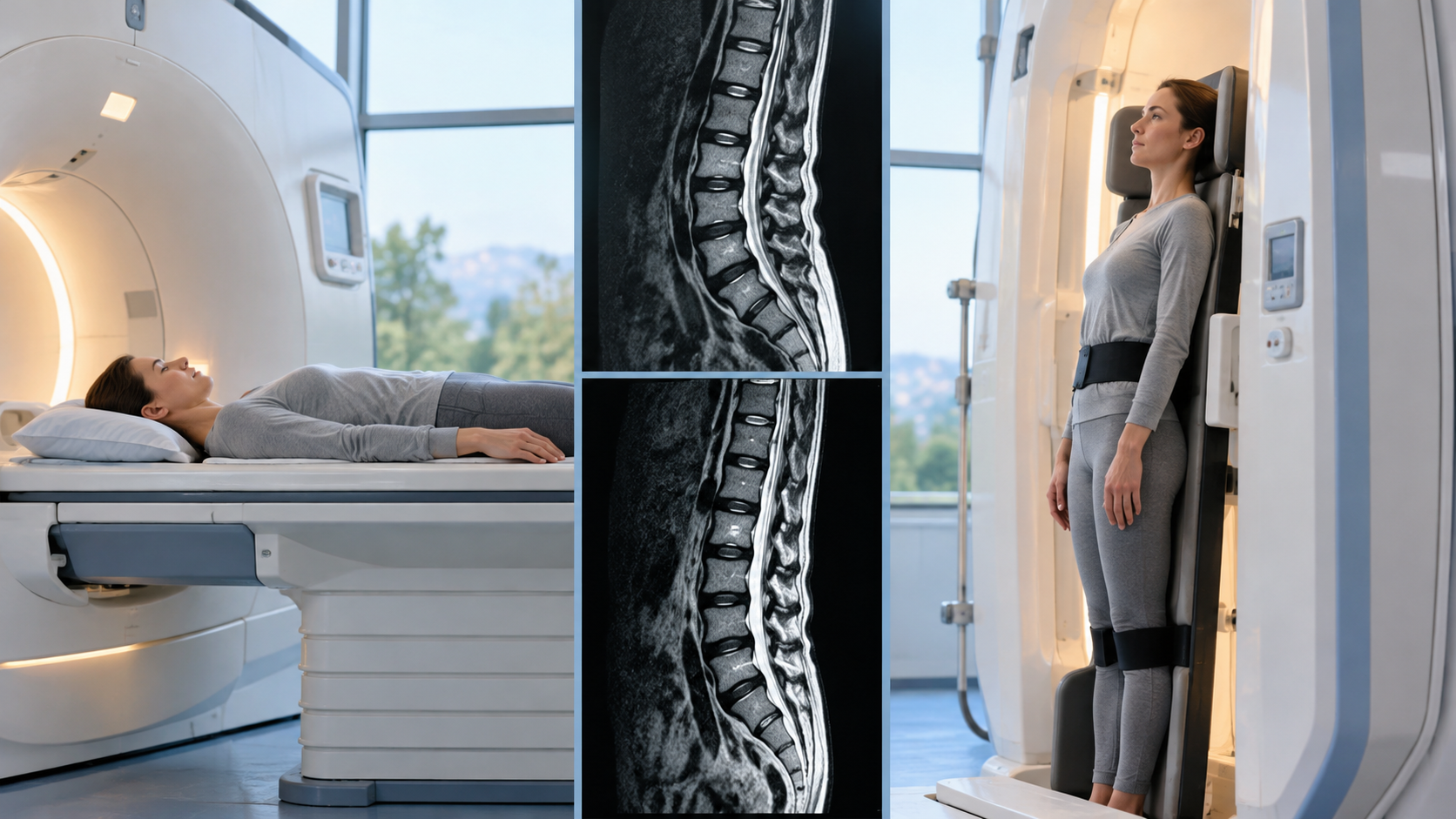
What Is a Multi-Position MRI?
A multi-position MRI, also called a positional or dynamic MRI, captures the same body area in different postures. Depending on the order, that can include standing, sitting, lying down, and bending, with the neck or spine in neutral, flexed, or extended positions.
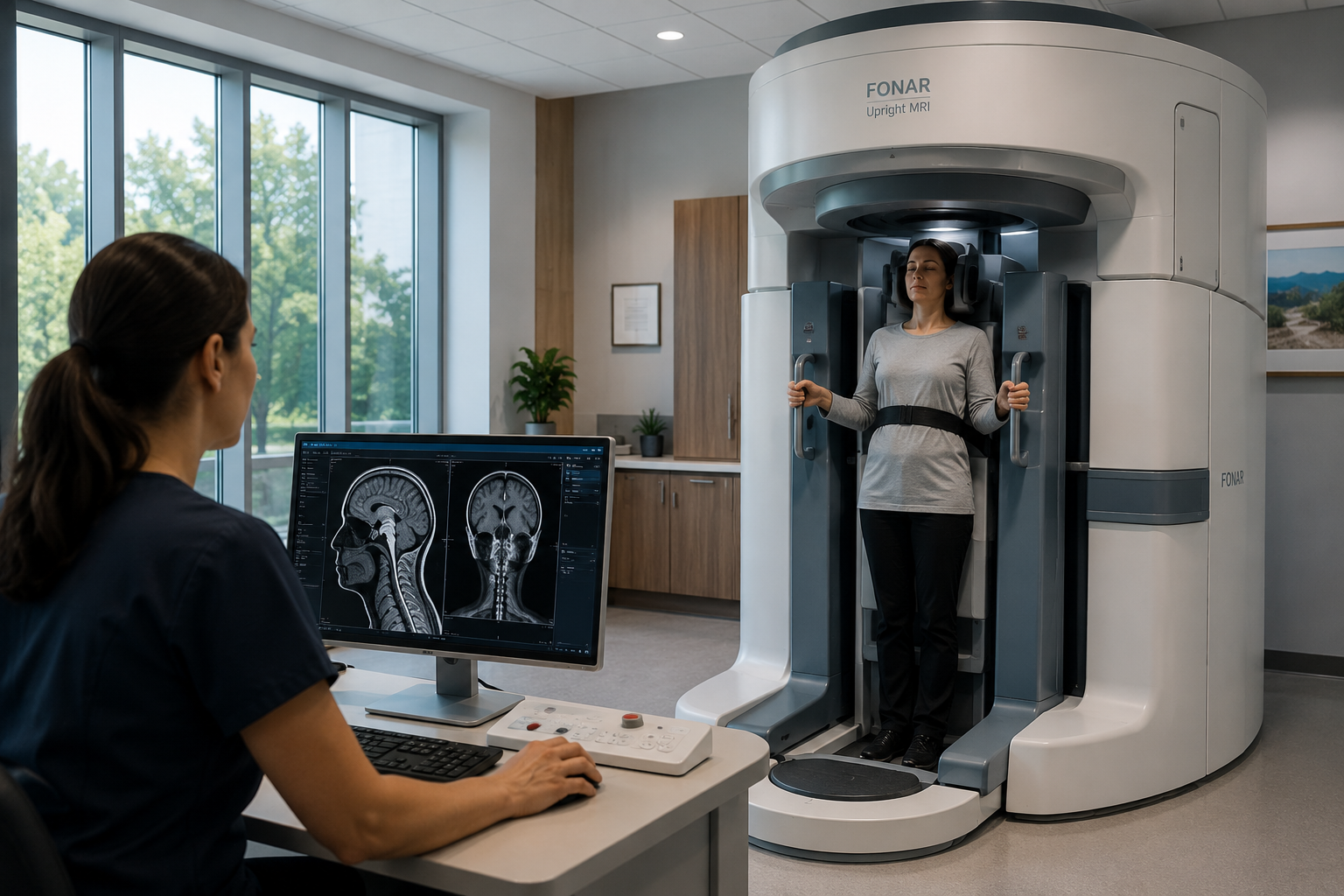
The goal is to see how anatomy behaves while it is working. A scanner with an open, upright design makes this possible, because the patient can stand or sit inside it instead of lying in a closed tube.
How Is a Multi-Position MRI Different From a Standard MRI?
A standard MRI images the body lying down, with the joints and spine unloaded. That view is excellent for detecting tumors, infections, inflammation, and most acute injuries, and it remains the default for good reason.
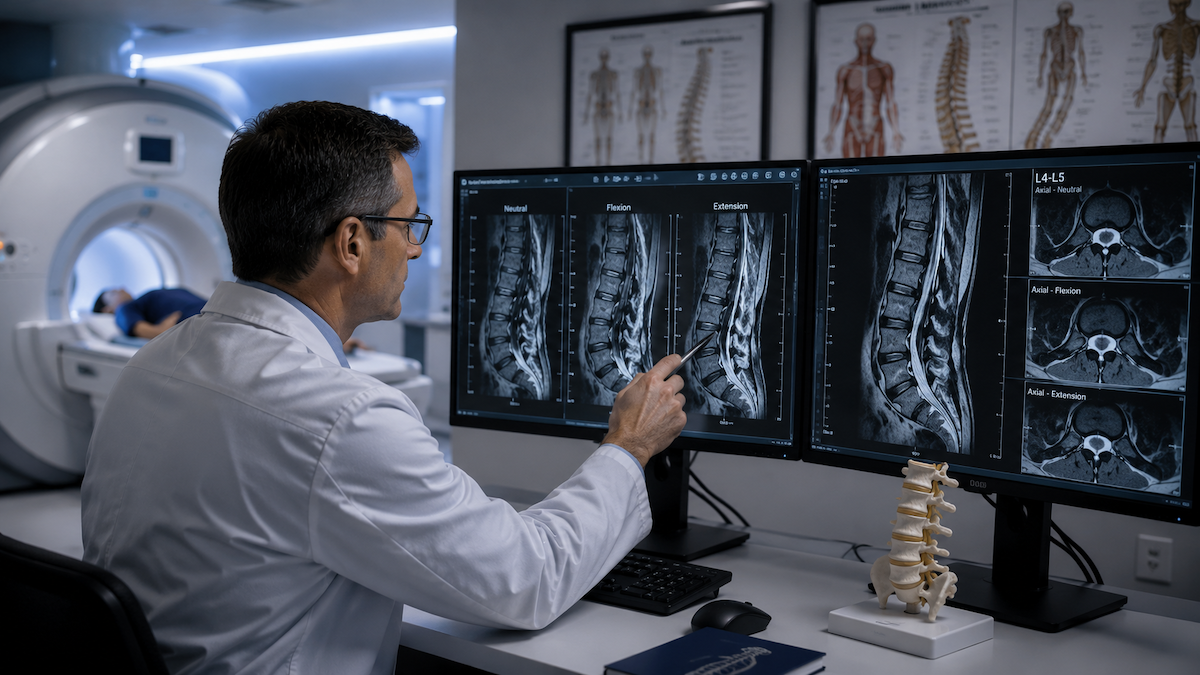
A multi-position MRI adds load and movement. The spine carries body weight while standing, the neck changes alignment when you look down, and joints compress when they bear weight. Comparing neutral and flexed views side by side can show narrowing, slipping, or nerve pressure that only appears in certain positions.
When Should You Ask Your Doctor About a Multi-Position MRI?
The clearest signal is a mismatch between your symptoms and your imaging. If your pain is real and repeatable but your report describes mild or no findings, it is fair to ask whether the scan captured the position in which the problem actually happens.
- Your symptoms reliably appear in a specific posture, such as standing, sitting, or looking down.
- Lying down relieves the pain or numbness, sometimes within minutes.
- Your previous supine scan came back normal or mild despite ongoing symptoms.
- Your doctor suspects instability, meaning a spinal segment that moves more than it should.
- You are planning surgery and your surgeon wants to see the spine under load.
None of these signs guarantees a different result. They suggest positional images are likely to answer a question that a flat scan could not.
Which Conditions Benefit Most From Multi-Position Imaging?
Positional imaging is most valuable where body weight or movement changes the space around nerves, discs, or cartilage. Three areas account for most requests.
Lower Back and Sciatica
Lumbar spinal stenosis, nerve opening narrowing, and spondylolisthesis often worsen under load. Imaging the lumbar spine under load can show narrowing that eases when the patient lies flat, which fits leg pain that builds while walking or sciatica that flares after long periods of sitting.
Neck and Upper Spine
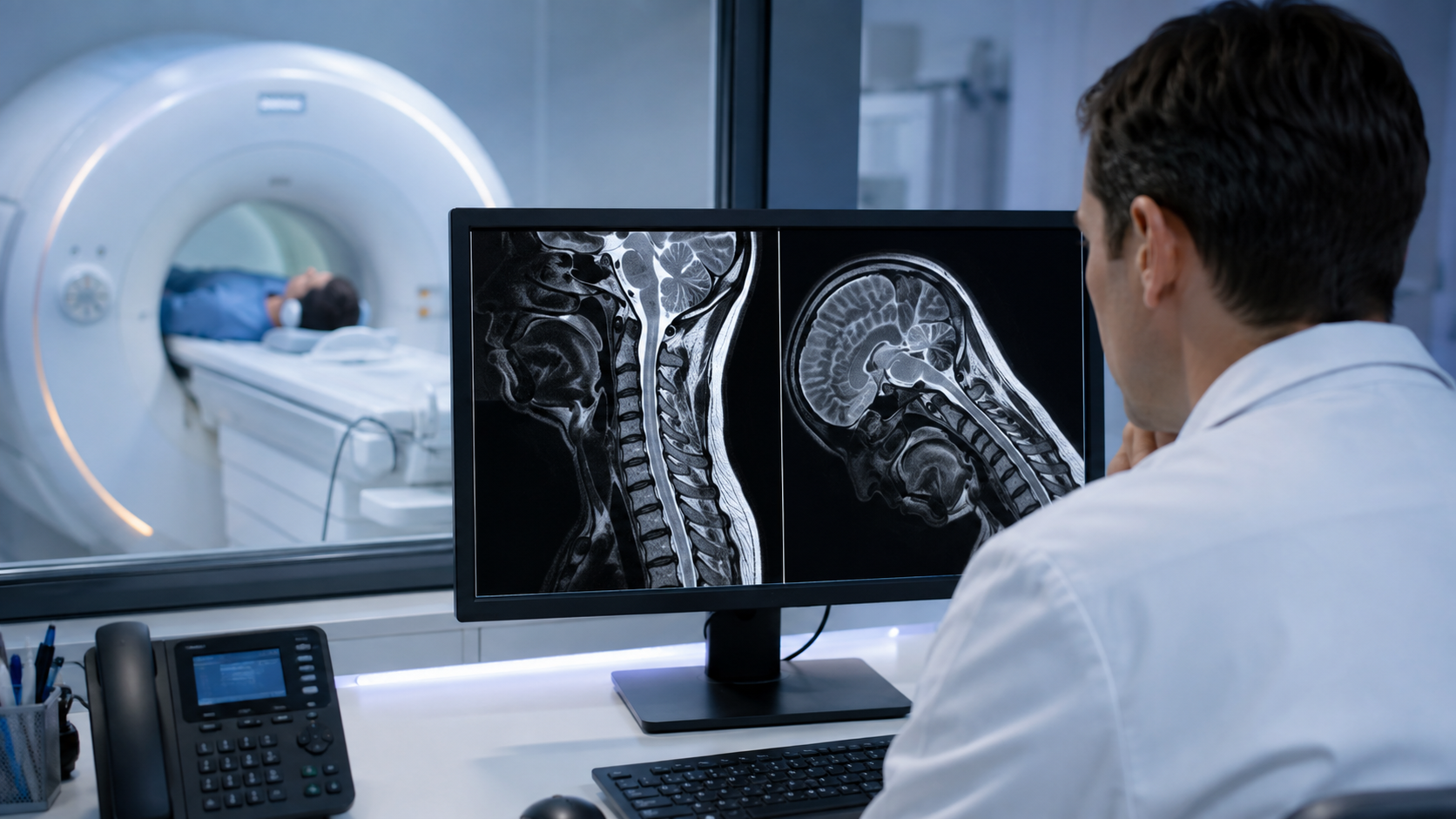
Neck pain, headaches, or arm symptoms that change with head position may relate to cervical stenosis or disc problems that tighten in flexion or extension. Patients evaluated for cranio-cervical instability often need upright, positional views because the condition involves excess movement where the skull meets the spine.
Weight-Bearing Joints
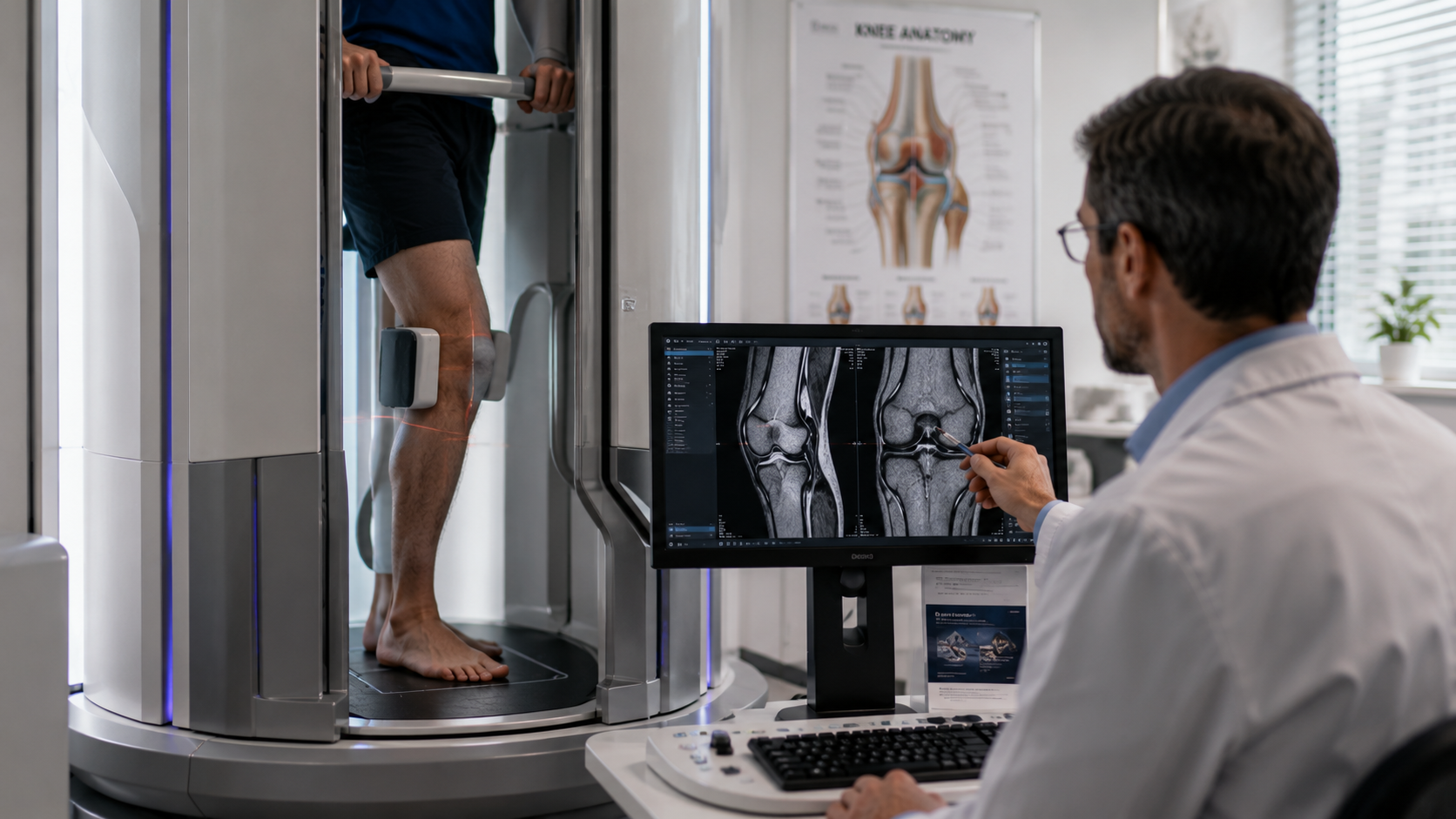
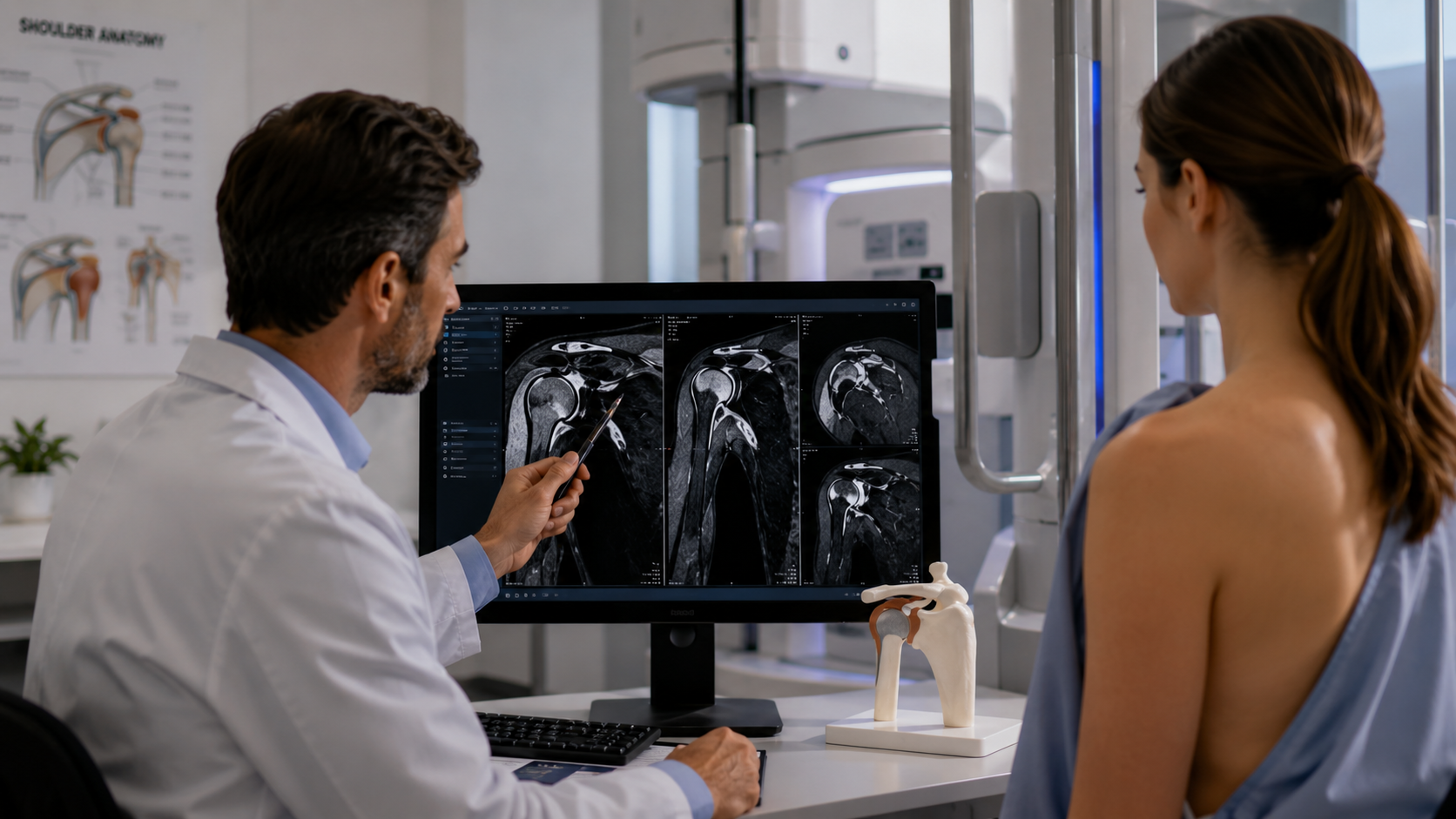
Knees, ankles, and feet are designed to carry body weight, so pain that appears only when standing or walking may reflect changes in cartilage, menisci, or alignment under load. Standing views can help explain knee pain that appears on your feet but disappears at rest, and shoulders can be imaged in positions that reproduce pain.
When Is a Standard MRI Enough?
A standard lying-down MRI is usually the right first test when symptoms are constant rather than positional, or when doctors are looking for tumors, infection, inflammation, fractures, or a clear acute injury. These problems tend to look the same in any position.
Urgent symptoms also call for immediate care rather than a request for a specialized scan. Sudden weakness, loss of bladder or bowel control, numbness in the groin area, or severe pain after an injury need prompt medical evaluation.
How Do You Request a Multi-Position MRI?
Start with your physician, since an MRI requires a prescription. Describe exactly when your symptoms occur, which positions trigger them, and what relieves them. The more specific you are, the easier it is for your doctor to justify positional views and choose the right ones.
Ask your doctor to list the positions on the order, such as standing, seated, or flexion and extension. Your ordering physician can also send prior imaging so the radiologist can compare old and new results directly.
Before booking, check coverage. Some plans cover positional views and some limit them, so understanding your MRI insurance coverage ahead of time helps avoid surprises.
What Should You Expect During a Multi-Position Scan?
In an upright scanner, you walk into an open space and the technologist helps you into each ordered position, using supports to keep you steady. Each position adds its own set of images, so the total time depends on how many positions and body areas are included.
Because the space is open, many people who feel anxious in closed scanners find the experience easier. At Upright MRI of Deerfield, patients can bring their own music or movies, and a family member or caregiver can stay with them in the room.
Frequently Asked Questions
Is a multi-position MRI the same as an upright MRI?
They overlap but are not identical. An upright MRI refers to a scanner that can image you standing or sitting, while a multi-position MRI describes an exam that uses more than one posture. Upright scanners are what make most multi-position exams possible.
Can I request a multi-position MRI without a doctor?
No, an MRI requires a physician's prescription. You can ask your doctor whether positional views would help and share the details of when your symptoms occur. Your doctor decides whether the exam is appropriate and which positions to include.
How long does a multi-position MRI take?
The total time depends on how many body areas and positions are ordered. Each position adds its own set of images, so the exam usually takes longer than a single-position scan. The imaging center can give an estimate when you schedule.
Is a multi-position MRI worth it if my first MRI was normal?
It can be when your symptoms are clearly positional and still unexplained. Positional views may show narrowing, instability, or disc changes that relax when lying flat. If your pain is constant and does not change with posture, a scan in another position is less likely to add new information.
Is a multi-position MRI safe?
Yes, MRI uses magnetic fields and radio waves rather than ionizing radiation. The same safety screening applies as with any MRI, including questions about implants, devices, and metal in the body. Changing position does not add risk beyond the time needed to hold each posture.
Conclusion
A multi-position MRI is worth requesting when your symptoms depend on how you stand, sit, or move, and a standard scan has not explained them. A clear description of your symptom pattern is the best first step toward deciding with your doctor whether positional images will help.
Upright MRI of Deerfield offers standing, sitting, bending, and lying-down imaging in an open, patient-friendly setting. If you and your doctor think positional views could answer your questions, reach out to our team to plan your scan.
SHARE THIS POST:
Leave a Comment:

The World's Most Patient-Friendly MRI. A comfortable, stress-free, and completely reliable MRI scan. We offer patients an open, upright, standup MRI experience that helps those who are claustrophobic and stress being in a confined area. Upright MRI of Deerfield is recognized as the world leader in open MRI innovation,
Our Recent Post


READ PATIENT TESTIMONIALS
Upright MRI of Deerfield.
Susan D.,
Highland Park, 39
I am going to tell everyone about your office! This was a great experience after I panicked in other MRI machines and had to leave. Thank you so much.

Judith B.,
Milwaukee, 61
I suffer from vertigo and other MRIs do not work. This was wonderful…absolutely NO discomfort at all. The MRI was so fast…I wanted to stay and watch the movie! Mumtaz was great. His humor really put me at ease. I’ve already recommended Upright MRI to friends.
Delores P.,
Glencoe, 55
Everything is so nice and professional with your place. I have been there a couple of times. My husband and I would not go anywhere else.