
Is a Cervical Spine MRI More Accurate Upright?
Neck pain can affect daily routines, sleep, mobility, and overall comfort. When symptoms begin to spread to the shoulders, arms, or hands, it becomes even more important to understand what is happening in the cervical spine. Imaging plays a key role in diagnosing these issues, but many patients are surprised to learn that posture and positioning during the scan can affect how much detail the MRI reveals.
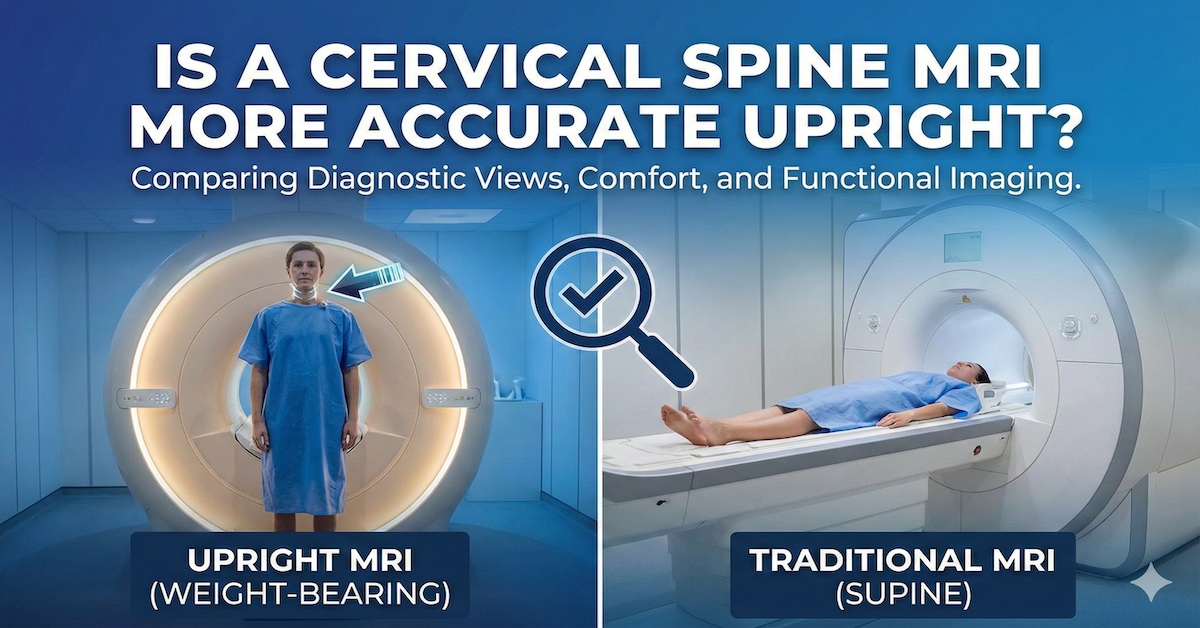
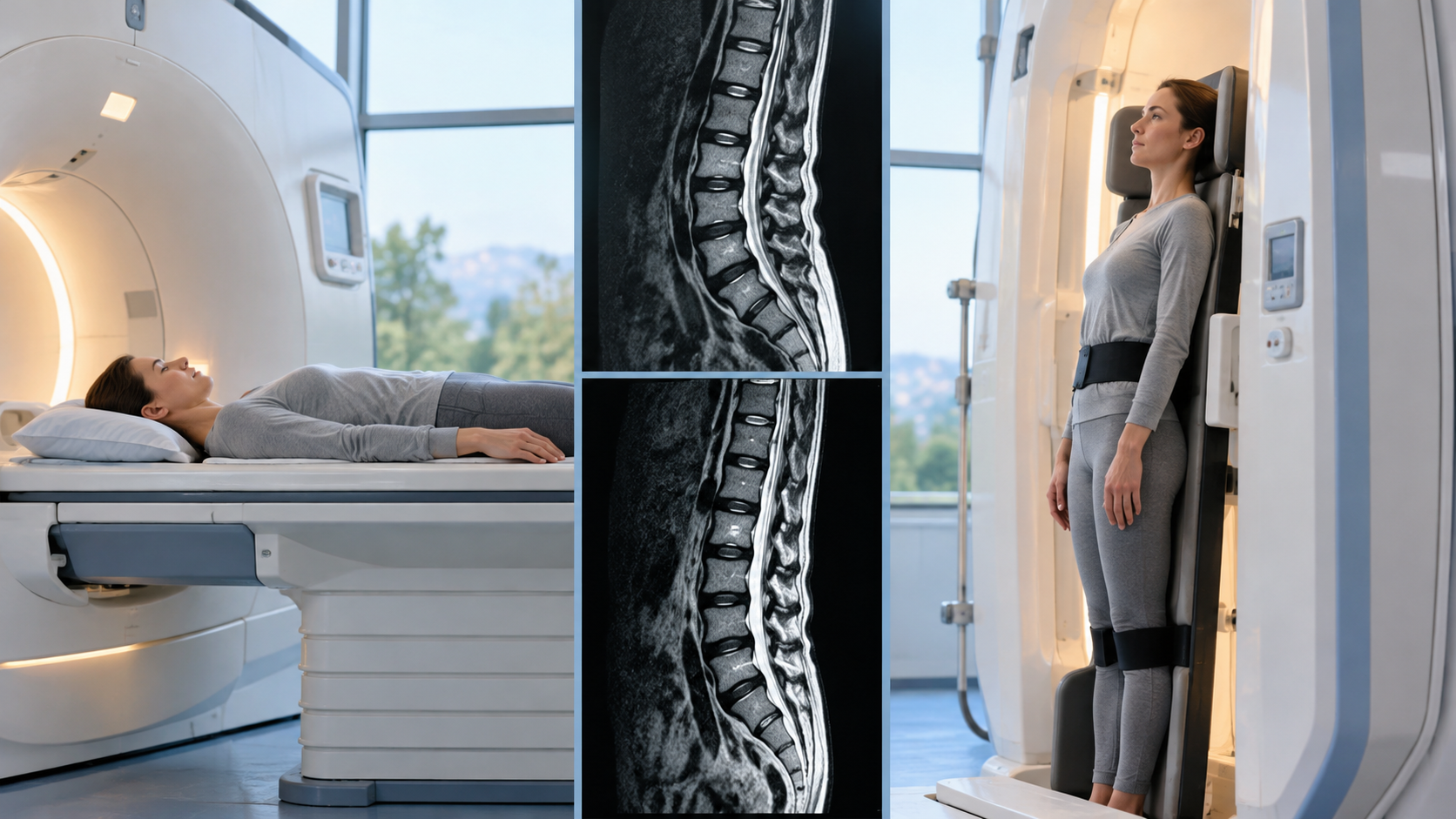
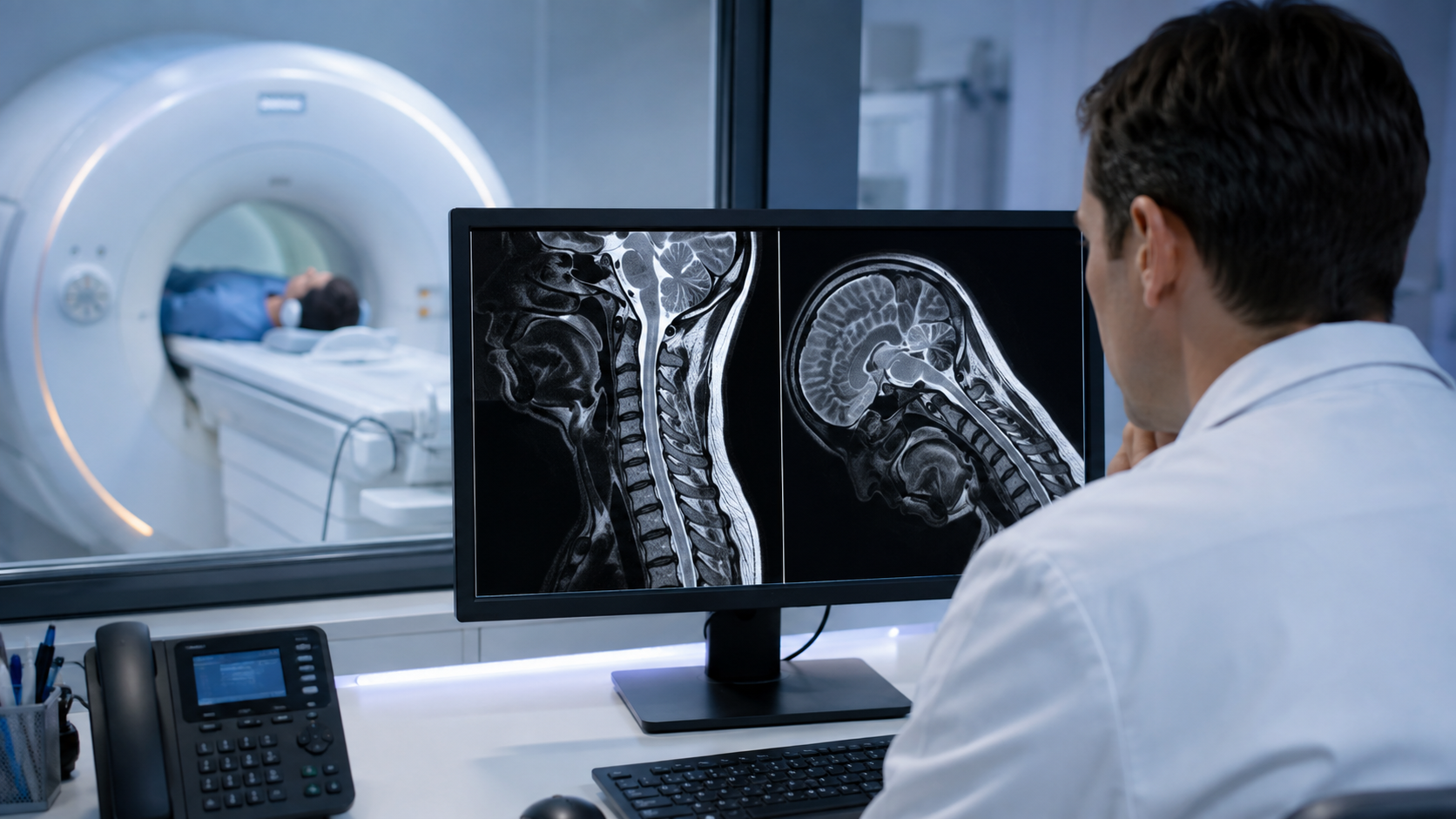
Traditional MRIs are done lying down, a position that does not reflect natural spinal alignment. Many cervical spine problems appear or worsen when sitting or standing. Upright MRI technology allows doctors to see the neck in real weight bearing positions, which can reveal issues that a standard MRI may miss.
Quick answer: Yes, an upright cervical spine MRI is often more accurate because it shows the neck under normal weight and posture. This helps reveal disc bulges, spinal canal narrowing, and nerve compression that may not be visible when lying flat.
Why Cervical Spine Conditions Need Accurate Imaging
The cervical spine supports the head, protects the spinal cord, and guides nerve signals that travel into the shoulders, arms, and hands. Even small changes in alignment or disc shape can cause pain, weakness, or numbness. Because the neck is sensitive and complex, imaging must capture the spine as it behaves in real life.
Pain while sitting, standing, or working at a desk often points to load dependent issues. These problems appear when the neck supports the weight of the head. When lying down, the spine relaxes, and these issues may temporarily improve. This is why lying down MRI does not always show the source of pain.
Accurate imaging makes it easier for doctors to choose the right treatment, especially when symptoms change with posture.
How Upright Cervical MRI Works
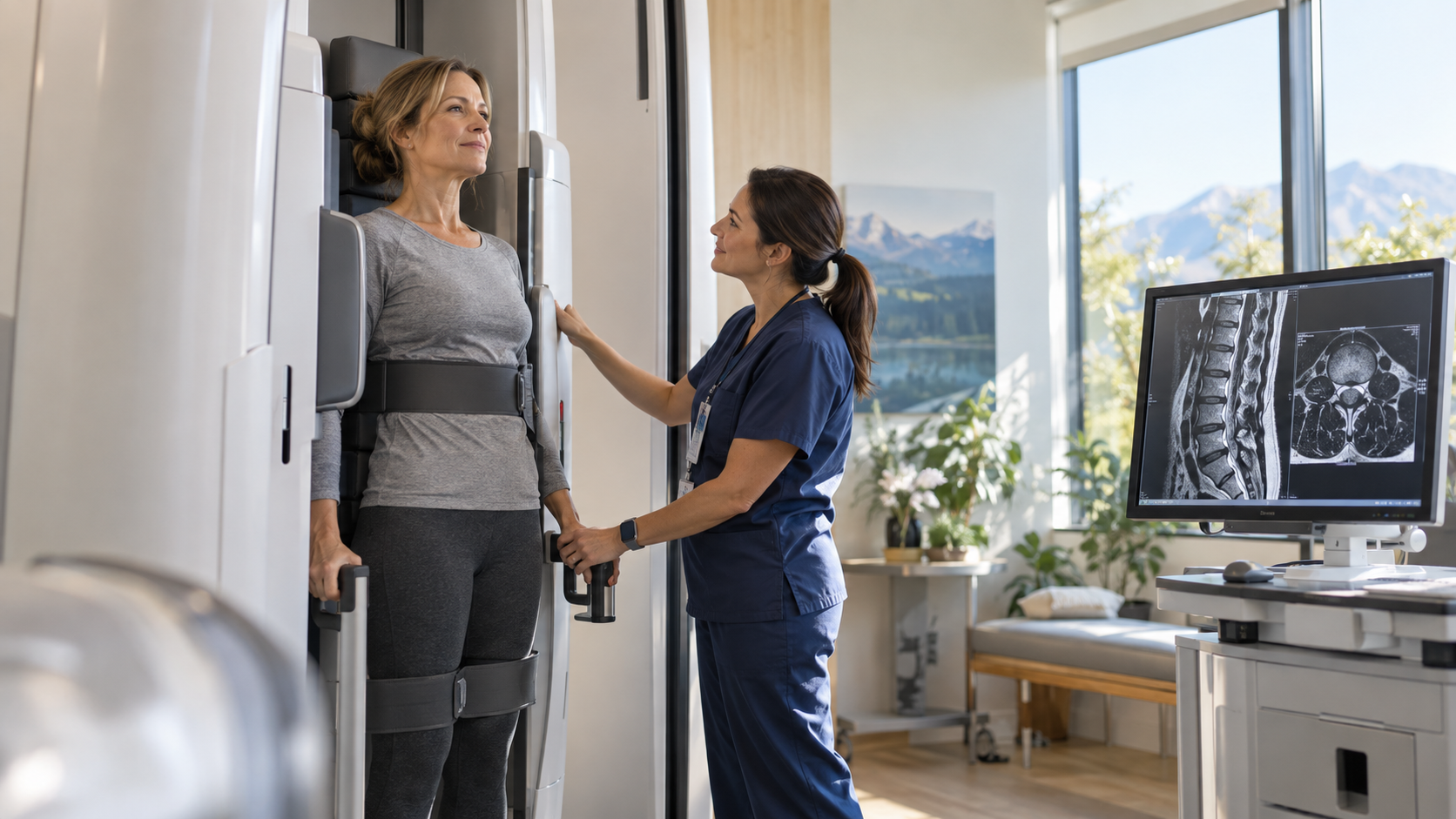
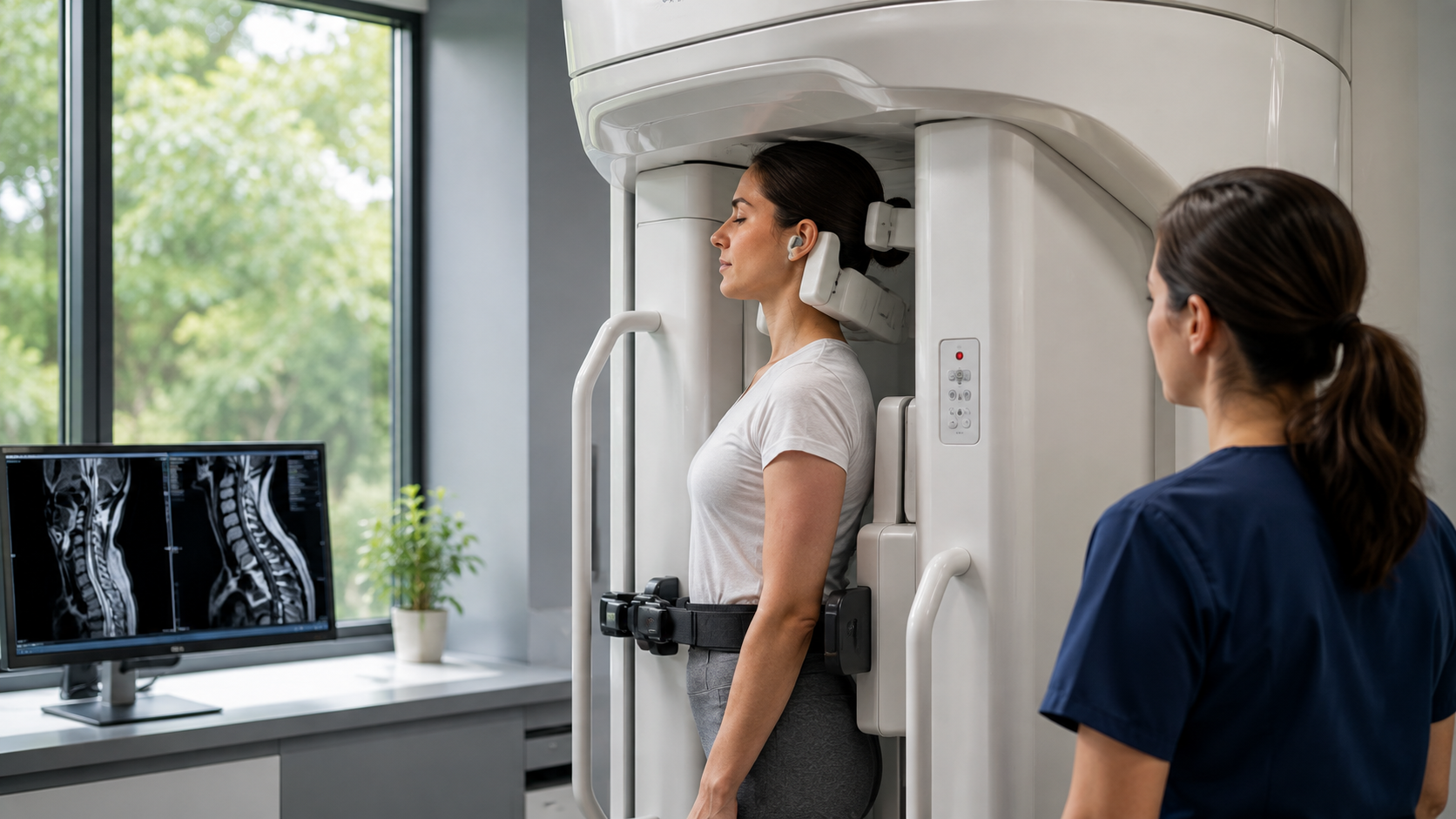
Upright MRI allows the patient to sit or stand during the scan. This position reflects everyday movement and posture, making the images more realistic. Instead of lying inside a closed tube, the patient is placed in a comfortable seated or upright position with a clear view of the room.
Dynamic imaging is another advantage. Upright MRI can capture the neck in different positions, such as bending forward, tilting backward, or turning to the side. These views help reveal changes in the spinal canal, disc movement, and nerve openings.
Because the spine behaves differently as it moves, capturing multiple angles provides a more complete understanding of the issue.
Why Upright MRI Is Often More Accurate for the Cervical Spine
The cervical spine supports the weight of the head, and gravity plays a major role in how discs and joints behave. When sitting or standing, discs may bulge more, vertebrae may compress slightly, and nerve passages may narrow. These changes can be the very cause of ongoing pain.
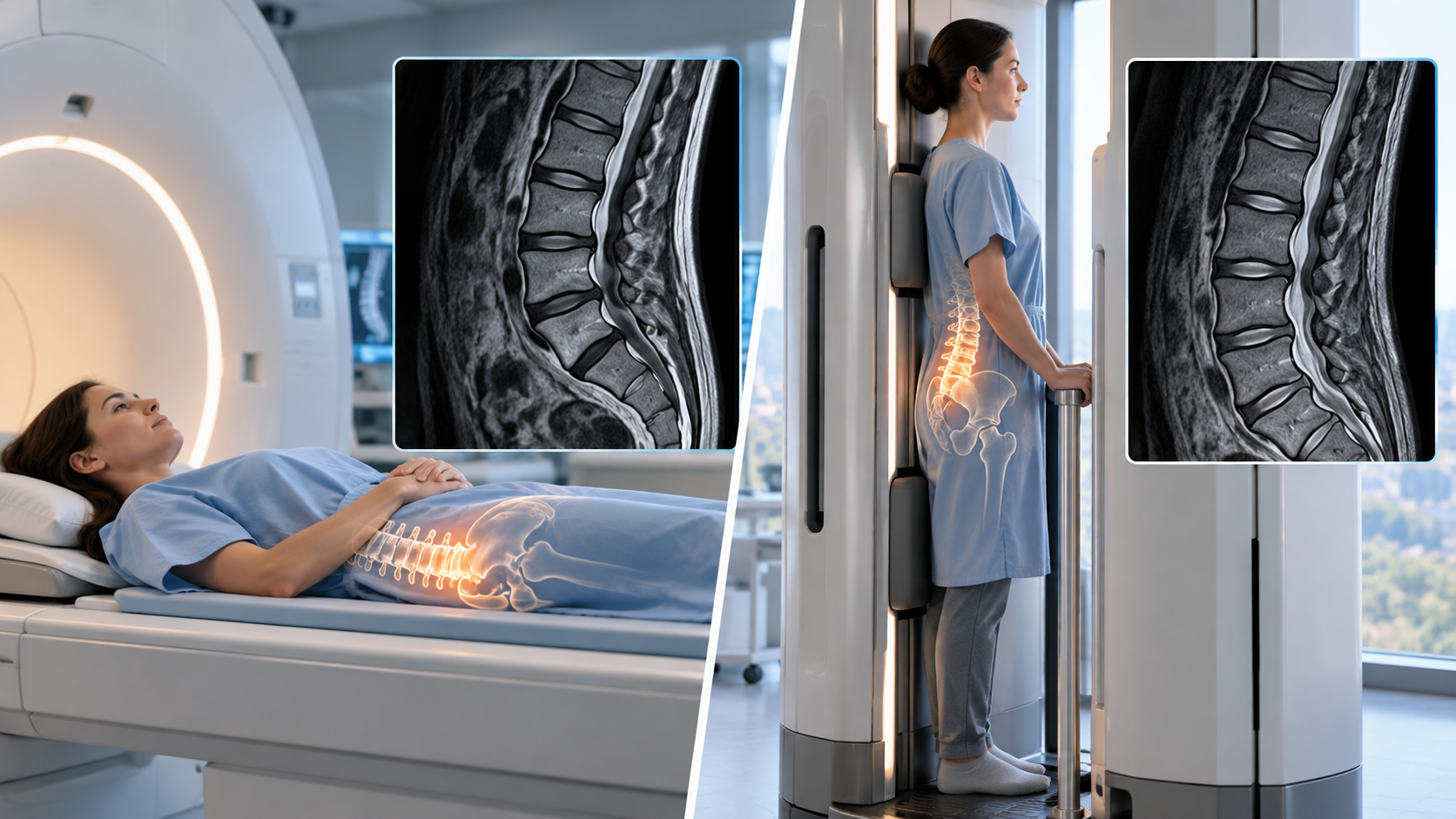
Upright MRI shows these shifts clearly. It reveals misalignment that may go unnoticed when lying down. It also highlights disc compression because the load on the neck is natural. This makes it easier to detect both mild and severe disc issues.
Nerve impingement becomes more visible as well. When upright, nerve openings can narrow due to posture, degeneration, or disc movement. Seeing the neck under weight helps identify the exact location of nerve compression.
Conditions Best Evaluated With Upright Cervical MRI
Several neck related conditions benefit from upright imaging. Herniated discs often appear more pronounced when upright because the load increases pressure. This helps doctors see the true height and shape of the disc.
Cervical stenosis is another condition where upright MRI excels. The spinal canal or nerve openings may look normal when lying flat but become significantly narrower when the neck is supporting weight. Upright MRI captures this change.
Degenerative disc disease affects many adults and often becomes more noticeable when upright. The images may show decreased disc height or instability only visible under pressure.
Whiplash injuries and other trauma based conditions can also become more obvious with upright imaging. Certain misalignments appear only when the neck is held in natural positions.
Advantages Over Traditional Lying Down MRI
One of the biggest advantages of upright MRI is that it correlates better with real symptoms. If a patient feels pain while sitting at work or standing for long periods, imaging the neck in that same position provides clearer answers.
Traditional lying down MRI sometimes masks issues. When the spine relaxes, certain problems temporarily disappear, giving an incomplete picture.
Upright MRI avoids this problem by imaging the spine under realistic load conditions.
Another advantage is comfort. Upright MRI is more spacious and open than traditional machines, reducing anxiety and claustrophobia. Patients can breathe comfortably, look around, and feel more at ease throughout the scan.
This comfort also helps patients stay still, which improves the quality of the images.
Who Should Consider an Upright Cervical MRI
Anyone experiencing chronic neck pain, numbness, tingling, or weakness in the arms may benefit from upright imaging. It is especially helpful for people whose symptoms change when sitting or standing.
Patients with posture related problems, including tech neck or strain from computer work, also gain clearer results from upright MRI. These issues often worsen under weight, making upright imaging ideal.
People who have had a previous MRI that did not show a clear diagnosis should consider upright MRI as well. Many patients find that the upright scan finally reveals the source of their pain.
Those who feel uncomfortable or anxious in traditional enclosed MRI machines also find upright imaging more manageable.
Conclusion
Upright MRI provides a clearer and more accurate view of the cervical spine by capturing images under natural weight bearing conditions. This helps reveal disc problems, nerve compression, and structural changes that may not appear during a lying down scan. For patients seeking answers to persistent neck pain, upright MRI offers both precision and comfort.
If you want the most accurate imaging for neck and cervical spine concerns, UpRight MRI of Deerfield offers advanced upright scanning designed to show exactly how your spine behaves in daily life. Their team provides a comfortable experience and high quality results to help guide your next steps toward relief.
SHARE THIS POST:
Leave a Comment:

The World's Most Patient-Friendly MRI. A comfortable, stress-free, and completely reliable MRI scan. We offer patients an open, upright, standup MRI experience that helps those who are claustrophobic and stress being in a confined area. Upright MRI of Deerfield is recognized as the world leader in open MRI innovation,
Our Recent Post


READ PATIENT TESTIMONIALS
Upright MRI of Deerfield.
Susan D.,
Highland Park, 39
I am going to tell everyone about your office! This was a great experience after I panicked in other MRI machines and had to leave. Thank you so much.

Judith B.,
Milwaukee, 61
I suffer from vertigo and other MRIs do not work. This was wonderful…absolutely NO discomfort at all. The MRI was so fast…I wanted to stay and watch the movie! Mumtaz was great. His humor really put me at ease. I’ve already recommended Upright MRI to friends.
Delores P.,
Glencoe, 55
Everything is so nice and professional with your place. I have been there a couple of times. My husband and I would not go anywhere else.