What Happens During an MRI Scan?
Medical imaging allows doctors to see inside the body and identify health issues that might otherwise be difficult to diagnose. One of the most advanced imaging tools used today is Magnetic Resonance Imaging, commonly called MRI. This technology produces detailed images of internal structures, helping doctors examine muscles, joints, organs, and other tissues.
Despite how common MRI scans have become, many patients still feel uncertain about the process. People often wonder what the procedure involves, how long it takes, and whether it will be uncomfortable. Understanding what happens during an MRI scan can help reduce anxiety and make the experience feel much easier.
Quick Answer: During an MRI scan, the patient lies or sits in an MRI machine while powerful magnets and radio waves create detailed images of the body's internal structures. The procedure is painless, requires the patient to remain still, and usually takes between 20 and 60 minutes.
What Is an MRI Scan?
An MRI scan is a medical imaging test used to produce detailed pictures of the body's internal tissues and organs. It uses strong magnetic fields and radio waves rather than radiation.
Doctors use MRI scans to examine many areas of the body, including the brain, spine, joints, and internal organs. Because MRI images are very detailed, they are often used to diagnose injuries, detect abnormalities, and monitor treatment progress.
MRI technology is considered safe and is widely used in hospitals and imaging centers around the world.
Preparing for an MRI Scan
Preparation for an MRI scan is usually simple. Patients may be asked to remove metal objects such as jewelry, watches, or hair accessories before the procedure.
Because MRI machines use strong magnets, metal items must be kept outside the scanning room. Patients may also be asked about medical implants or devices, as certain metal implants may not be compatible with MRI machines.
In most cases, no special preparation such as fasting is required unless instructed by a doctor.
What Happens During the Scan
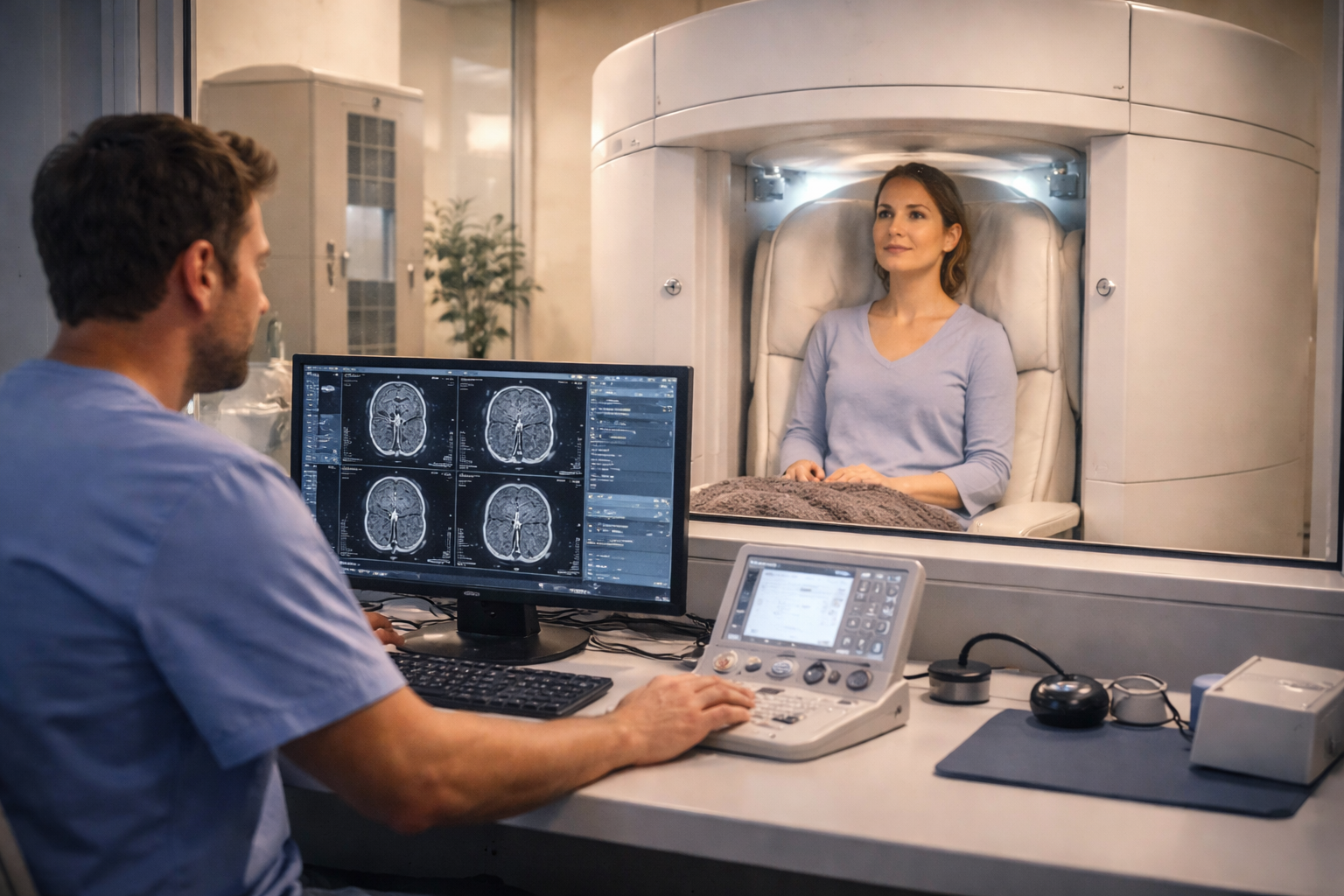
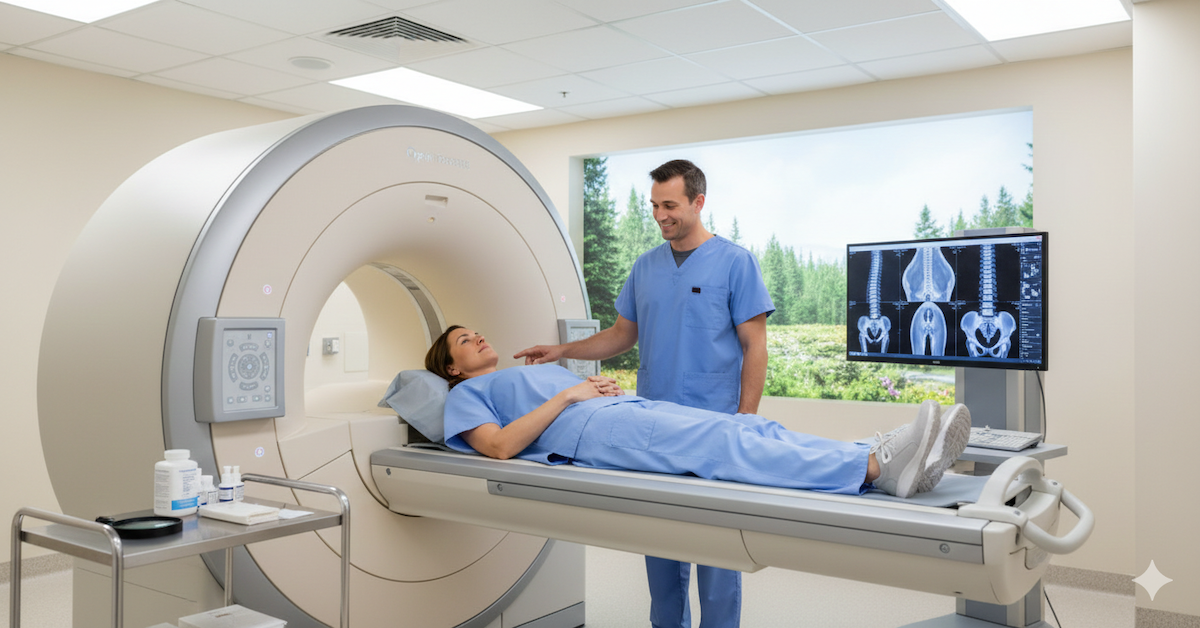
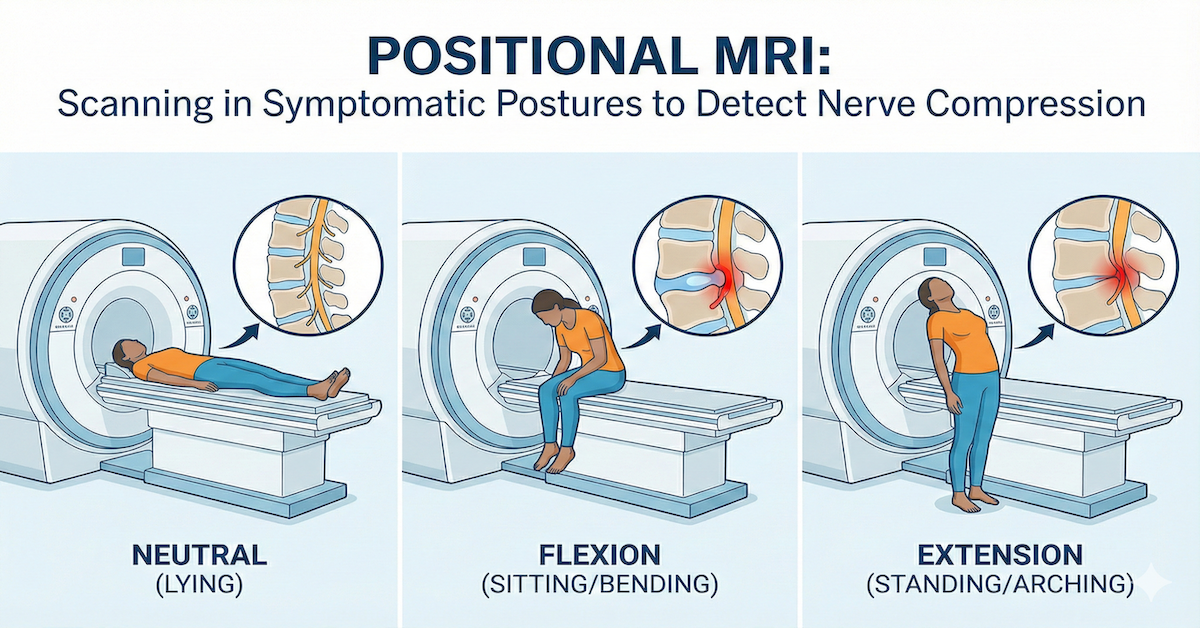
When the scan begins, the patient is positioned on a table or seated in the MRI machine depending on the type of scanner being used.
The technician will ensure the patient is comfortable and properly positioned for the images being taken. Once the scan starts, the machine begins capturing images using magnetic fields and radio waves.
During the procedure, the MRI machine produces loud tapping or knocking sounds. Ear protection is usually provided to reduce noise.
It is important for patients to remain still while the images are being taken. Movement can affect image quality and may require the scan to be repeated.
How Long Does an MRI Scan Take
The length of an MRI scan depends on the area of the body being examined.
Most MRI procedures take between 20 and 60 minutes. Some scans may take longer if multiple areas need to be imaged or if additional sequences are required.
Although the process may seem long, patients usually remain comfortable throughout the procedure.
What Patients Feel During an MRI
An MRI scan is generally painless. Patients do not feel the magnetic fields or radio waves during the imaging process.
The most noticeable aspect of the scan is the noise produced by the machine. The loud knocking sounds are normal and occur while the machine captures images.
Some patients may feel slight warmth in the area being scanned, which is also normal.
FAQs
Is an MRI scan painful?
No, MRI scans are painless. The procedure simply requires the patient to remain still while the images are taken.
How long does an MRI scan usually take?
Most MRI scans take between 20 and 60 minutes depending on the area being examined.
Can I move during an MRI scan?
Patients should remain still during the scan so that the images remain clear and accurate.
Conclusion
MRI scans are one of the most effective imaging tools available in modern medicine. They allow doctors to examine the body in great detail without the use of radiation. While the procedure may seem intimidating at first, understanding what happens during the scan can help patients feel more prepared and comfortable.
From preparation to image capture, the MRI process is designed to be safe and efficient. By following simple instructions and remaining still during the scan, patients can help ensure accurate results.
At Upright MRI of Deerfield, we are committed to providing advanced imaging technology while prioritizing patient comfort. Our team works closely with every patient to make the MRI experience as smooth and stress free as possible.
SHARE THIS POST:
Leave a Comment:

The World's Most Patient-Friendly MRI. A comfortable, stress-free, and completely reliable MRI scan. We offer patients an open, upright, standup MRI experience that helps those who are claustrophobic and stress being in a confined area. Upright MRI of Deerfield is recognized as the world leader in open MRI innovation,
Our Recent Post






READ PATIENT TESTIMONIALS
Upright MRI of Deerfield.
Susan D.,
Highland Park, 39
I am going to tell everyone about your office! This was a great experience after I panicked in other MRI machines and had to leave. Thank you so much.

Judith B.,
Milwaukee, 61
I suffer from vertigo and other MRIs do not work. This was wonderful…absolutely NO discomfort at all. The MRI was so fast…I wanted to stay and watch the movie! Mumtaz was great. His humor really put me at ease. I’ve already recommended Upright MRI to friends.
Delores P.,
Glencoe, 55
Everything is so nice and professional with your place. I have been there a couple of times. My husband and I would not go anywhere else.