
Can a Lumbar Spine MRI in Flexion Show Hidden Issues?
Lower back pain is one of the most common reasons people seek medical care, and finding the exact cause can be difficult. Many patients experience pain only when moving, walking, or bending, yet their traditional MRI results show nothing unusual. This disconnect often occurs because standard MRI scans are performed while lying flat, a position that removes pressure from the spine and may hide the real problem.
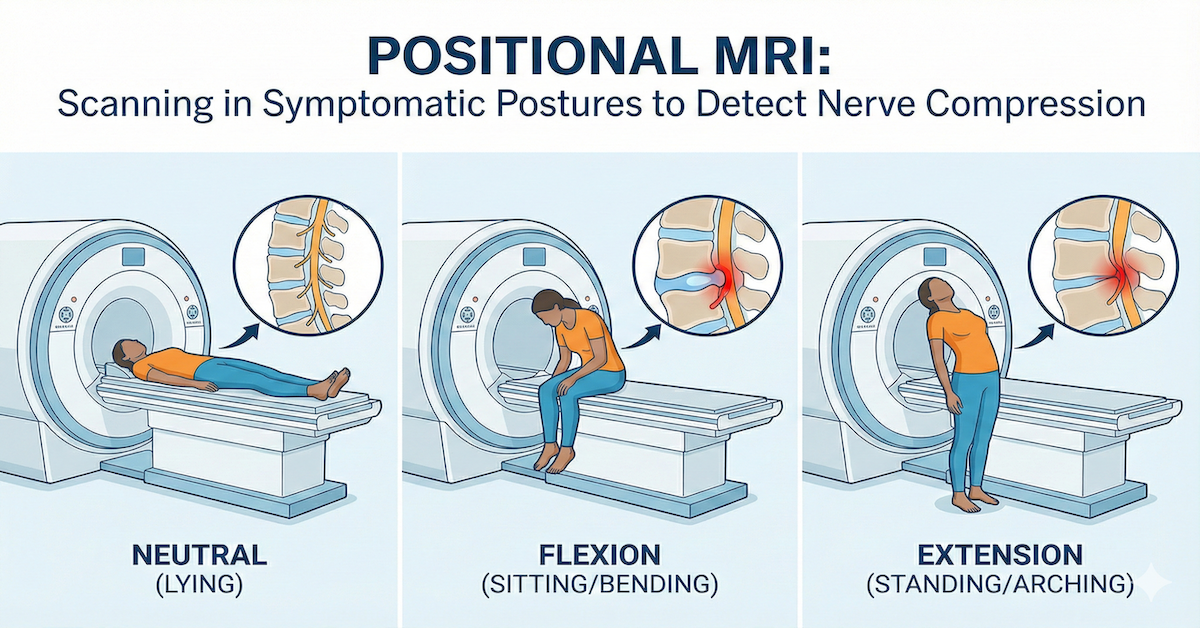
A lumbar spine MRI done in flexion, which captures images while the spine is bent forward, can reveal issues that are invisible in a traditional scanner. This type of imaging is especially valuable for people whose symptoms change depending on posture or activity. When the spine is viewed under natural weight and movement, the results may finally match the pain a patient feels.
Quick Answer:
Yes, a lumbar spine MRI in flexion can show hidden issues that do not appear on a standard MRI. Bending the spine forward changes how the discs, nerves, and spinal canal behave under pressure, revealing conditions such as dynamic stenosis, posture related nerve compression, and joint instability. This type of imaging helps doctors understand pain that occurs only while standing, bending, or moving.
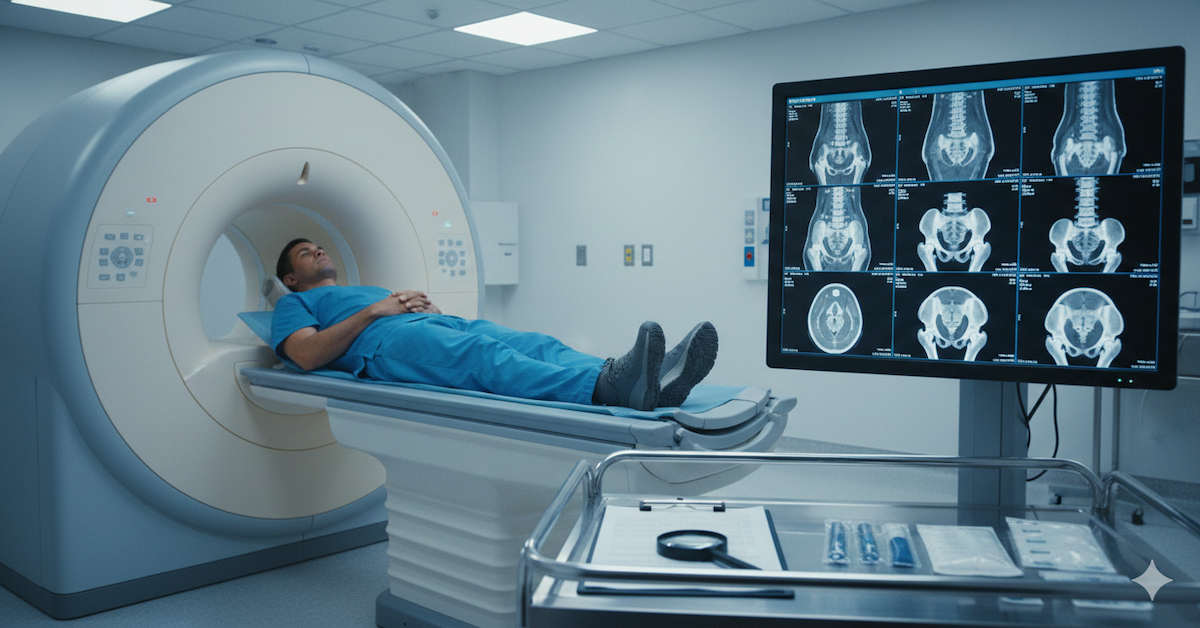
Why Flexion MRI Gives a More Complete Picture
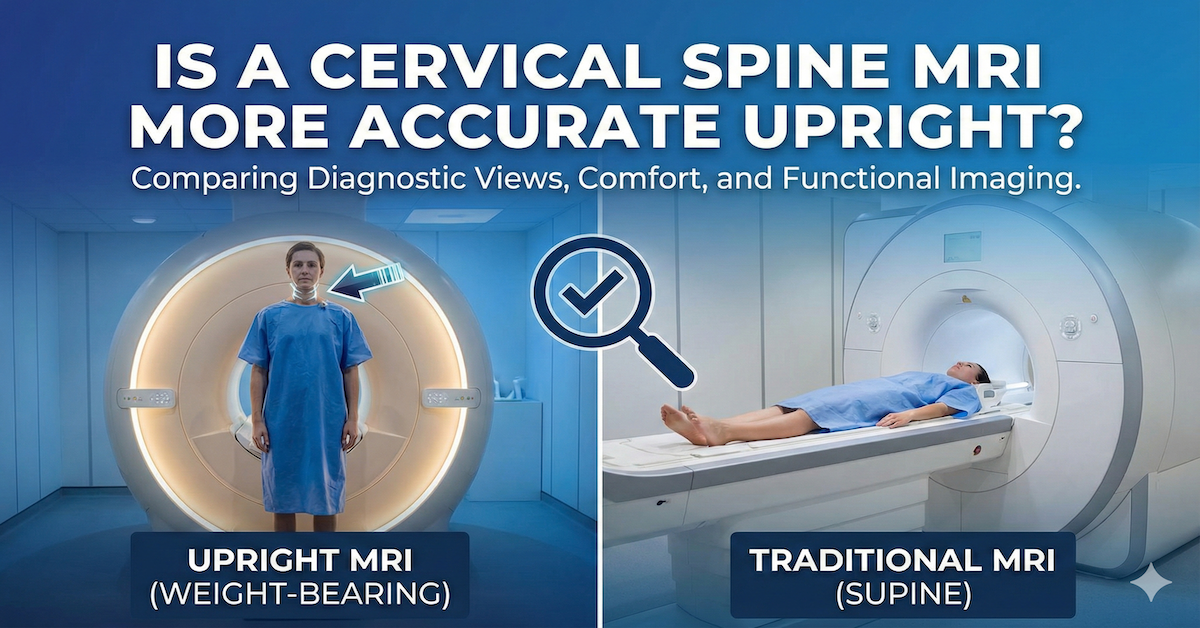
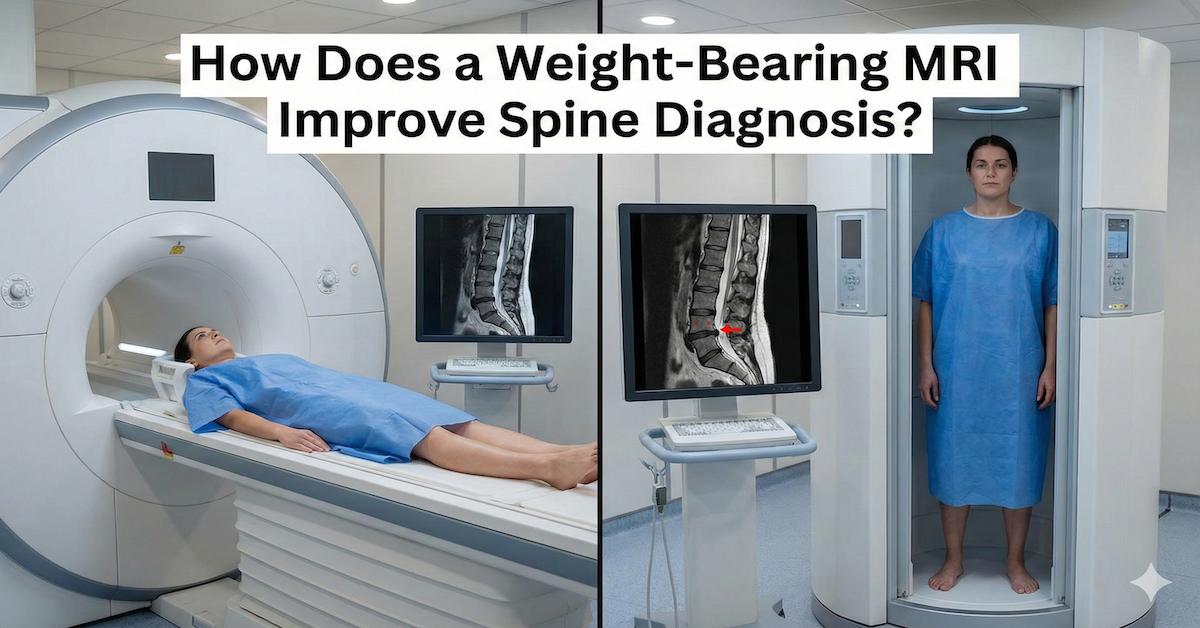
A traditional MRI is performed with the patient lying flat on their back. This position removes the natural load and pressure the spine carries when upright. For many people, their pain comes from activities like bending, walking, or standing. Once they lie down, the spine decompresses, and the problem temporarily disappears.
A flexion MRI captures the spine in a forward bent position. This posture increases pressure on certain areas and highlights issues that occur only during movement. By allowing the spine to function in a more natural state, the scan becomes a more accurate reflection of what the patient experiences day to day.
Hidden Problems a Flexion MRI Can Reveal
A flexion MRI can detect conditions that are highly positional. These issues may remain invisible during a standard flat scan because the spine is not under the same stress.
One major condition revealed through flexion imaging is dynamic lumbar stenosis. In this condition, the spinal canal narrows only when the spine bends or when the person stands. The narrowing may pinch nerves or reduce space for the spinal cord. Because this compression disappears when lying flat, a standard MRI often misses it.
Another issue is vertebral instability. When the spine moves into flexion, one vertebra may shift forward slightly. This creates irritation, pressure, or pain that does not appear when the spine is supported on a table. Flexion imaging helps highlight these subtle shifts.
Flexion MRI can also show disc bulges or herniations that become more pronounced with bending. Some discs only protrude under weight or movement, causing pain during activity but not while resting. Seeing the disc in a bent position gives a far clearer understanding of how it behaves in daily life.
Why Pain Appears Only in Certain Positions
Many people with back pain notice clear patterns. Their discomfort might increase while leaning forward, walking long distances, or holding certain postures. This occurs because the spine carries weight differently depending on position. When someone lies down, much of this pressure disappears, which can temporarily hide the source of pain.
Flexion MRI helps reveal the root cause by recreating the conditions that trigger symptoms. It shows how the nerves respond, how the discs shift, and how the spinal openings change shape during movement. This information is essential for accurate diagnosis and targeted treatment.
Benefits of Choosing an Upright Flexion MRI
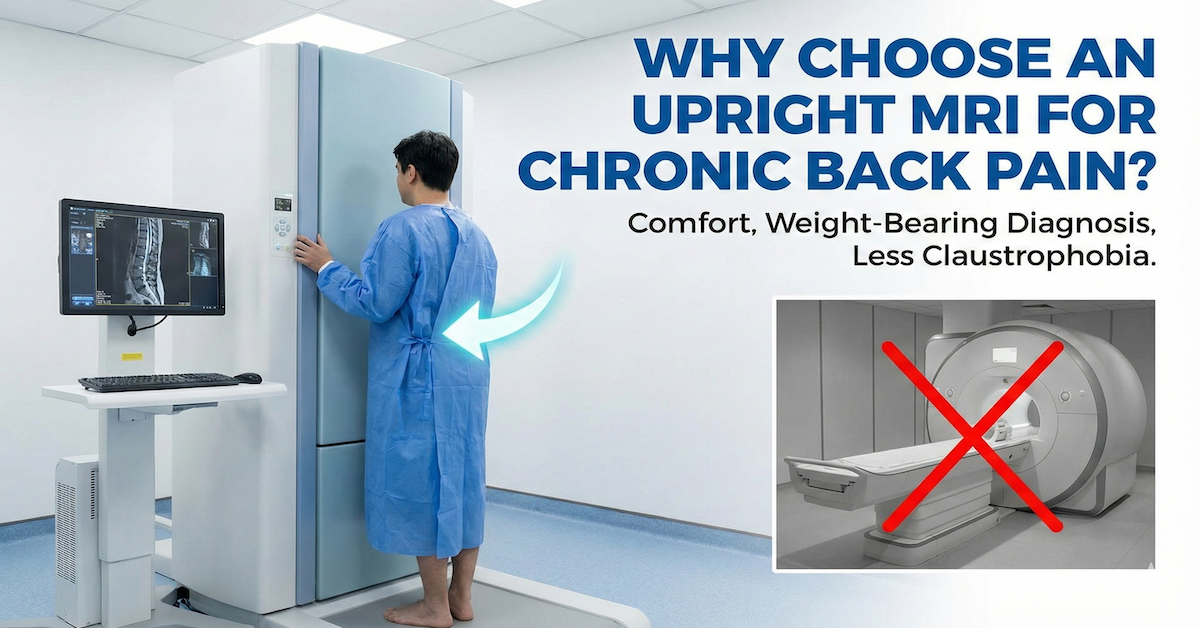
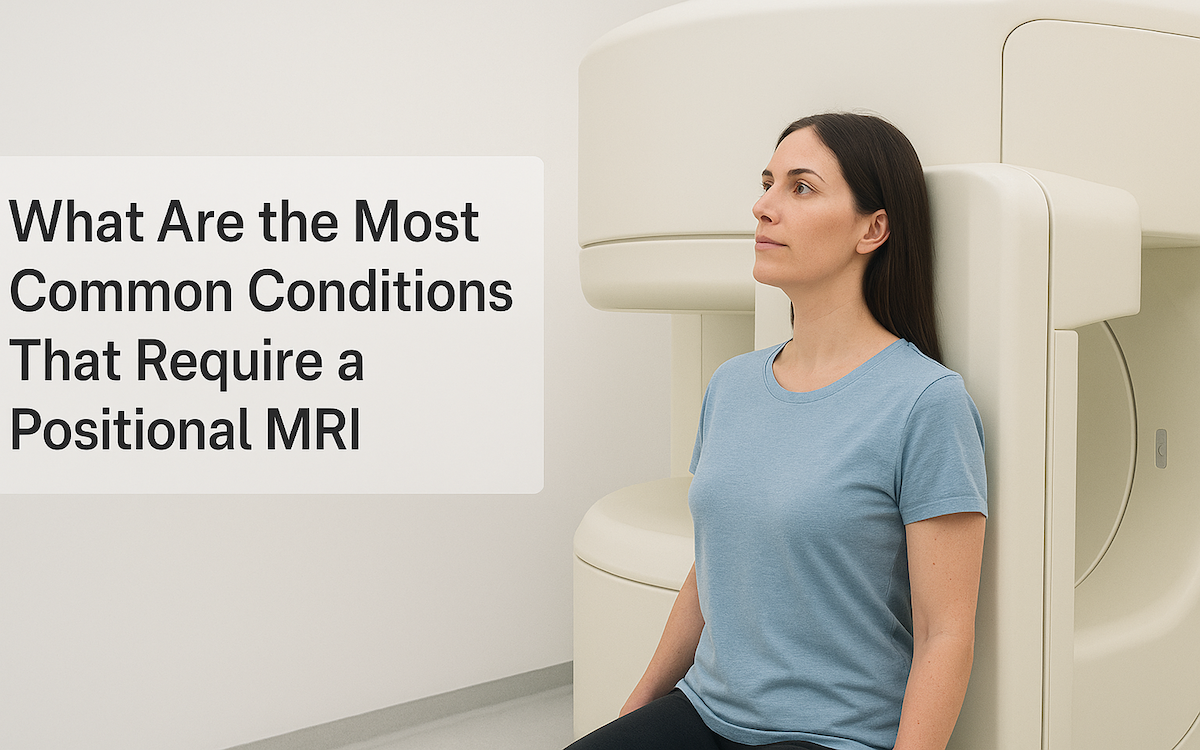
One of the biggest advantages of upright MRI technology is that it allows patients to be scanned while sitting or standing. When combined with flexion, this approach creates a realistic picture of how the spine functions under everyday loads. Patients who cannot lie flat due to pain also find upright MRI far more comfortable.
Another benefit is improved accuracy. When the imaging reflects real movement patterns, doctors can create more effective treatment plans. Some patients avoid unnecessary surgery because the upright view reveals the true issue. Others finally receive a diagnosis after months or years of unclear results from traditional imaging.
Upright MRI also eliminates the need for sedation, which is often used for patients who feel discomfort in tight, enclosed scanners. The open design offers clear visibility and space, helping patients stay relaxed throughout the scan.
Who Can Benefit Most From Flexion Lumbar Imaging
A flexion MRI can be especially helpful for patients with symptoms that change based on movement or posture. This includes people who feel pain while walking but not while sitting, or those whose discomfort improves when leaning forward. Patients with a history of spinal stenosis, disc problems, or instability also benefit from this advanced imaging.
Individuals who have had a normal traditional MRI but still experience significant pain often find answers through flexion imaging. When symptoms do not match standard results, positional imaging is one of the most reliable ways to uncover the missing information.
Conclusion
A lumbar spine MRI in flexion can reveal hidden problems that standard lying down scans miss. By showing how the spine behaves under real movement, weight, and bending, this type of imaging uncovers conditions like dynamic stenosis, position based nerve compression, and vertebral instability. For patients seeking clearer answers about back pain, flexion imaging offers a more complete and accurate path to diagnosis.
Upright MRI of Deerfield provides advanced positional imaging that helps patients and physicians understand back pain more precisely. If you want clearer answers, more comfort, and imaging that reflects real movement, our upright and flexion MRI technology is designed to give you the full picture.
SHARE THIS POST:
Leave a Comment:

The World's Most Patient-Friendly MRI. A comfortable, stress-free, and completely reliable MRI scan. We offer patients an open, upright, standup MRI experience that helps those who are claustrophobic and stress being in a confined area. Upright MRI of Deerfield is recognized as the world leader in open MRI innovation,
Our Recent Post



READ PATIENT TESTIMONIALS
Upright MRI of Deerfield.
Susan D.,
Highland Park, 39
I am going to tell everyone about your office! This was a great experience after I panicked in other MRI machines and had to leave. Thank you so much.

Judith B.,
Milwaukee, 61
I suffer from vertigo and other MRIs do not work. This was wonderful…absolutely NO discomfort at all. The MRI was so fast…I wanted to stay and watch the movie! Mumtaz was great. His humor really put me at ease. I’ve already recommended Upright MRI to friends.
Delores P.,
Glencoe, 55
Everything is so nice and professional with your place. I have been there a couple of times. My husband and I would not go anywhere else.